Session Planning Tools Every Youth Basketball and Netball Coach Should Know
Discover the essential session planning tools, frameworks, and drills that help youth basketball and netball coaches run more effective, organised, and impactful training sessions — from season plans to the digital platforms transforming grassroots coaching.
Session Planning Tools Every Youth Basketball and Netball Coach Should Know
Stepping onto the court as a youth basketball or netball coach is an exhilarating experience. You are not just teaching young athletes how to shoot a layup or execute a chest pass; you are shaping their character, building their confidence, and fostering a lifelong love for the game. However, transforming raw enthusiasm into measurable skill development requires more than passion alone. It requires meticulous preparation.
A well-structured session plan is the cornerstone of effective coaching. It is the roadmap that ensures every minute on the court is purposeful, engaging, and aligned with long-term athlete development. In this comprehensive guide, we explore the essential session planning tools, frameworks, and practical drills that every youth basketball and netball coach needs to know — and how modern digital platforms are revolutionising the way coaches prepare for and execute their training sessions.
Why Session Planning Is the Bedrock of Youth Coaching
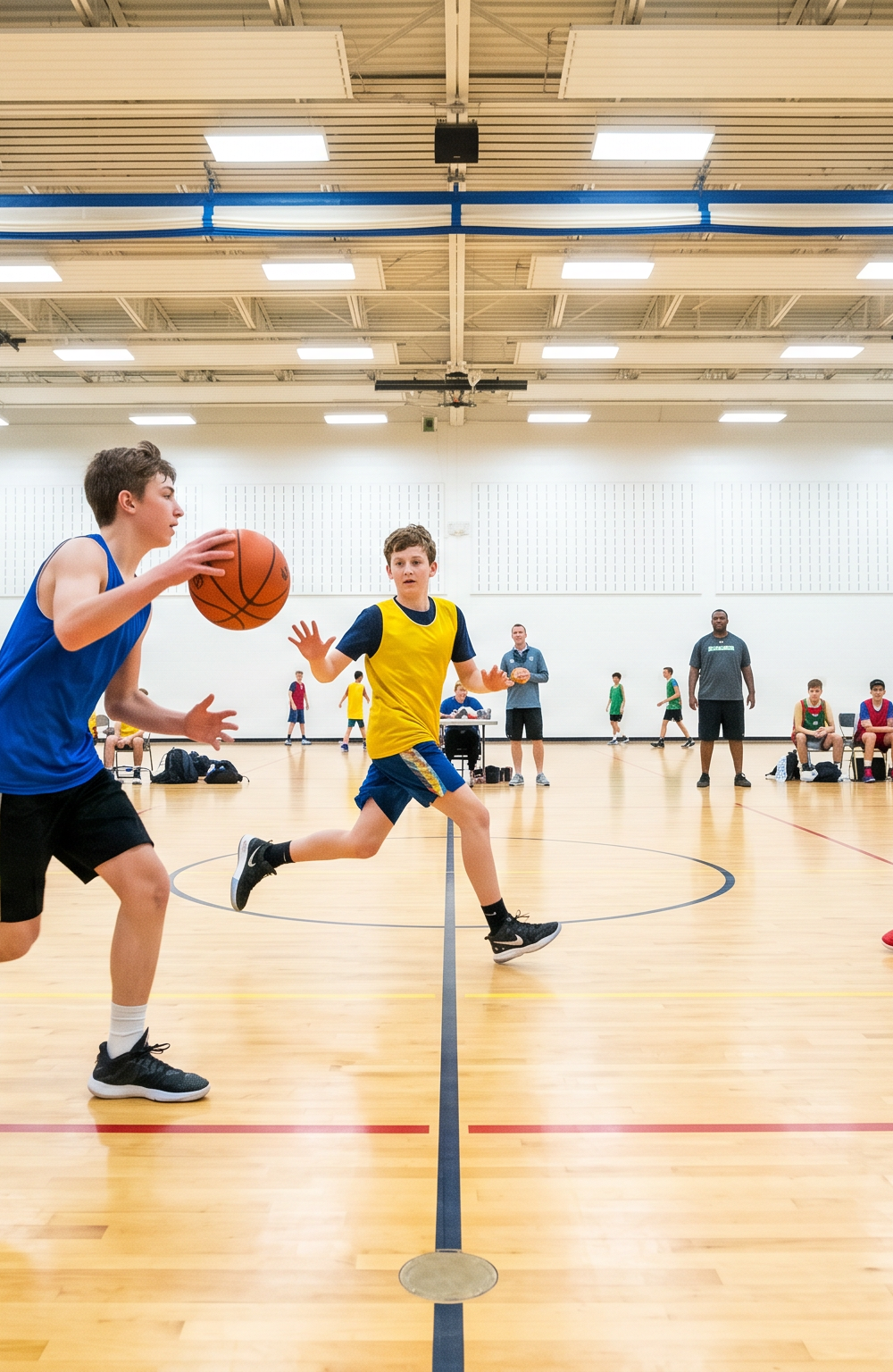
Youth athletes are fundamentally different from adults. Their cognitive processing, physical capabilities, and attention spans dictate a specialised approach to training. The Long-Term Athlete Development (LTAD) model, a globally recognised framework adopted by governing bodies across basketball and netball, emphasises that training must be tailored to an athlete's specific developmental stage rather than simply their age or competitive level. This means a session cannot be a random assortment of drills; it must deliver the right stimulus at the precise moment in a player's growth.
Research consistently demonstrates that coaches who plan their sessions in advance achieve significantly better outcomes. Players show higher skill retention, remain more engaged throughout practice, and experience fewer injuries. Furthermore, a written plan serves as a vital reflective tool — after the session, you can evaluate what succeeded, what failed to resonate, and what requires further reinforcement next week.
The good news is that planning does not have to be complicated or time-consuming. With the right tools and frameworks, you can build a system that saves hours each week while producing noticeably better results on the court.
The Macro View: Building a Season Plan First
Before writing a single session plan, you need a season plan. This is the strategic layer that sits above individual training sessions and answers the fundamental question: what do you want your players to be able to do by the end of the season that they cannot do today?
A practical approach used by experienced coaches is to divide the season into three distinct phases:
| Season Phase | Timing | Primary Focus |
|---|---|---|
| Development Phase | Early season | Foundational skills, fundamental movements, and player confidence. |
| Competition Phase | Mid-season | Applying skills in game contexts, tactical understanding, and team cohesion. |
| Review Phase | End of season | Consolidating learning, refining techniques, and preparing for the off-season. |
Within each phase, assign a primary focus and a secondary focus for both offensive and defensive skills. A youth basketball coach working with an under-12 group might set ball handling and footwork as the primary skills focus for the first eight weeks, with lay-ups and passing as secondary. On the defensive side, the primary focus might be one-on-one defensive stance and positioning. This level of intentionality ensures every session contributes to a cohesive developmental arc rather than being a collection of disconnected activities.
Netball coaches can apply the same logic. Prioritising driving and leading movements early in the season, combined with a secondary focus on centre-pass structures, gives players a coherent set of skills to build on week after week.
Crafting Your Reusable Session Plan Template
With a season plan established, the next step is creating a reusable session plan template. Rather than starting from scratch before every practice, experienced coaches develop two to four templates that reflect their seasonal priorities. Each template allocates specific time blocks to different components of the session, providing a consistent structure even as the specific drills change.
A proven 90-minute session structure for youth basketball or netball looks like this:
| Session Segment | Duration | Primary Focus |
|---|---|---|
| Dynamic Warm-Up | 10 minutes | Movement preparation, activation, and engaging games. |
| Skills Block 1 (Primary) | 15 minutes | Core focus of the day (e.g., ball handling, footwork). |
| Skills Block 2 (Secondary) | 10 minutes | Secondary focus (e.g., passing, shooting, or leading). |
| Defensive/Positional Work | 15 minutes | 1v1 defence, spatial awareness, positional responsibilities. |
| Tactical/Offensive Concepts | 10 minutes | Cutting, screening, set plays, or centre-pass structures. |
| Small-Sided Games | 10 minutes | 3v3 or 4v4 scenarios with specific constraints. |
| Full Scrimmage | 15 minutes | Application of skills in a game-realistic environment. |
| Cool-Down & Review | 5 minutes | Light stretching and a recap of key takeaways. |
Coaching Tip: Colour-code your session template by focus area — for example, blue for defensive work, orange for offensive skills, and green for fitness. This makes it easy to scan across your upcoming sessions and spot any gaps in coverage before they become problems.
5 Practical Drills to Elevate Your Sessions
The best drills are straightforward to set up, immediately engaging for young players, and directly transferable to game situations. Here are five that every youth basketball and netball coach should have in their library.
1. The Constrained Small-Sided Game (Both Sports)
Setup: Run a 3v3 or 4v4 game with a specific constraint that targets your session's primary focus. For basketball, a common constraint is requiring four completed passes before a shot can be attempted. For netball, you might restrict players to their designated zones or require the ball to pass through a specific player before a goal attempt.
Why it works: Constrained games are one of the most powerful tools in modern youth coaching because they create game-realistic decision-making within a focused learning environment. Players are not just executing isolated skills — they are solving problems, communicating, and adapting in real time. The constraint forces the desired behaviour without the coach needing to stop play and lecture.
Age group: All ages. Adjust the constraint to match the developmental level of the group.
2. Dribble Relay with Variations (Basketball)
Setup: Divide the team into equal groups. Place a series of cones approximately three metres apart in a straight line for each group. On the coach's whistle, the first player dribbles through the cones and back, then tags the next teammate.
Why it works: This drill builds ball-handling confidence under competitive pressure and develops change-of-pace dribbling. Progress the drill by requiring players to switch hands at each cone, execute a crossover, or dribble backward on the return leg. The competitive team format creates genuine excitement and urgency.
Age group: 8–14 years. Adjust cone spacing and dribble complexity to suit the group.
3. The Triangle Passing Matrix (Netball)
Setup: Arrange players in three lines forming a triangle, spaced roughly five metres apart. The front player from line A passes to the front of line B, who passes to line C, who returns to line A. After passing, each player immediately sprints to the back of the line they passed toward.
Why it works: This drill develops passing accuracy, timing, and the critical habit of moving immediately after releasing the ball — a fundamental principle of netball. Coaches can increase difficulty by introducing a defender in the centre or specifying the type of pass required (chest, bounce, or shoulder pass) on each rotation.
Age group: 9–15 years.
4. 3-on-2 Transition Attack (Basketball)
Setup: Three offensive players attack two defenders at one end of the court. Once possession changes — via a score, rebound, or steal — two of the offensive players transition to defence, and a new group of three attackers initiates a fast break toward the opposite hoop.
Why it works: This drill perfectly replicates the fast-break situations that occur constantly in youth basketball. It develops decision-making under pressure, teaches players to spread the floor, and challenges defenders to communicate and cover space effectively. Adding a scoring system increases competitive intensity and engagement.
Age group: 10–16 years.
5. One-on-One Defensive Shadowing (Netball)
Setup: Players pair up on the court. One player acts as the attacker, moving freely within a designated zone. The other is the defender, tasked with mirroring every movement while maintaining a body-length distance, without making physical contact.
Why it works: This drill isolates the footwork and body positioning that underpin all good netball defence. Removing the ball initially forces players to focus entirely on their feet, their angles, and their opponent's movements. Once players are comfortable, introduce a ball and allow the attacker to receive passes from a third player.
Age group: 10–16 years.
Embracing Digital Tools: The Vanta Sports Ecosystem
For many volunteer coaches, session planning still happens on a notepad or a printed template tucked into a clipboard. While there is nothing wrong with pen and paper, modern digital tools can significantly reduce the administrative burden of coaching — freeing up more of your mental energy for what actually matters: developing young players.
The key areas where technology can help youth coaches include session planning and drill organisation, attendance tracking, parent communication, player progress monitoring, and club-level administration such as registrations and payments.
This is where Vanta Sports stands apart. Purpose-built for youth basketball and netball, Vanta Sports offers a complete ecosystem of dedicated applications tailored to every stakeholder in the sporting community — clubs, coaches, parents, and players.
The Vanta Coach App: Your Digital Command Centre
For the volunteer coach, the Vanta Coach App is free and provides everything you need to plan and run effective sessions. You can build a personal drill library, construct detailed session templates, and seamlessly track player attendance. Because it is designed specifically for youth basketball and netball, the tools and workflows reflect the realities of grassroots coaching rather than the demands of elite professional sport.
The app also enables coaches to monitor individual player development over time — identifying which players are progressing well and which may need additional support in specific areas. This data-driven insight transforms attendance records and session notes from administrative tasks into genuine coaching intelligence.
Vanta Club: Streamlining the Administrative Layer
For club administrators, Vanta Club handles the full management layer. This platform manages player registrations, secure payment processing integrated with Stripe, compliance documentation, and safeguarding tools that are increasingly essential in youth sport. By centralising these functions, Vanta Club allows coaches to dedicate their energy to the court rather than the paperwork.
Connecting Parents and Players
The ecosystem extends to families as well. Vanta Guardian provides parents with a centralised hub to view schedules, manage payments, and receive team communications — eliminating the need for disjointed group chats and missed messages. Meanwhile, the Vanta Player App empowers young athletes to track their personal goals, celebrate achievements, and remain engaged with their team's progress between sessions.
By integrating these tools, Vanta Sports creates a unified environment where session planning, club management, and player development are seamlessly connected. For the dedicated youth coach already giving significant time to their community, this kind of streamlined infrastructure is not a luxury — it is a genuine game-changer.
Actionable Takeaways for Coaches
Building an effective session planning system does not happen overnight, but these principles will accelerate your progress regardless of your experience level. Start with a season plan that maps out your developmental priorities across three phases. Build two to four reusable session templates that align with those priorities. Incorporate at least one constrained small-sided game into every session to bridge the gap between isolated skill work and game application. Reflect after each session — even a brief two-minute note about what worked and what did not will compound into significant coaching insight over a season. And explore digital tools that reduce your administrative load, so more of your energy flows toward the players standing in front of you.
The coaches who have the greatest impact on young athletes are not necessarily those with the most technical knowledge. They are the ones who show up prepared, create a safe and structured environment for learning, and build systems that allow them to be fully present on the court. Session planning is the foundation of all of that.
Ready to Take Your Coaching to the Next Level?
Try the Vanta Coach App - Free for youth coaches. Learn more about Vanta Sports