5-Out Motion Offense Continuity Play
Learn the foundational 5-out motion offense, a continuous pass-and-cut system that creates incredible spacing, constant movement, and easy scoring opportunities at the rim.
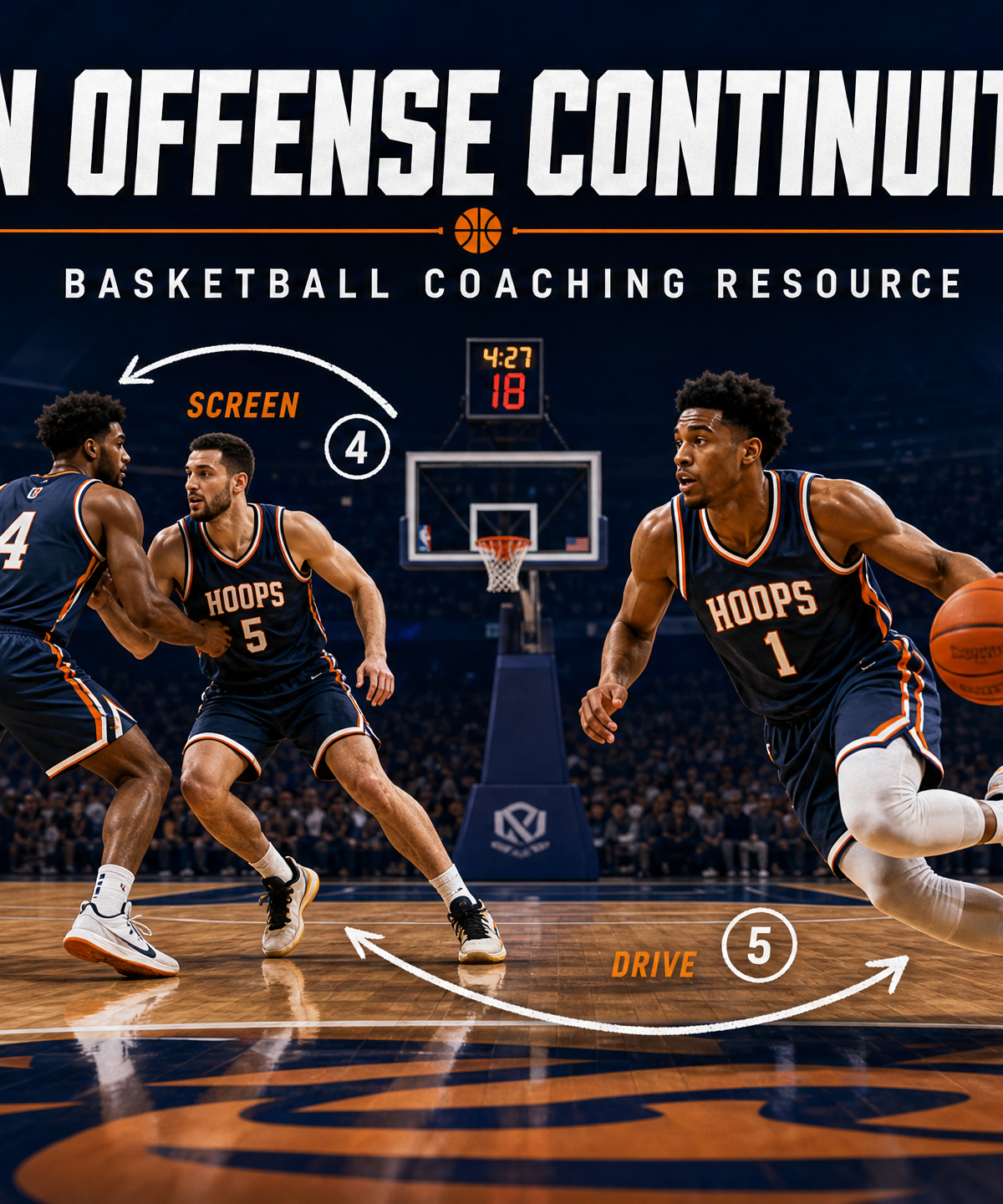
Equipment Needed
1. Overview
The 5-Out Motion Offense is a staple continuity play designed to maximize floor spacing, create driving lanes, and keep all five defenders constantly engaged. Unlike rigid set plays that break down if a single option is denied, this continuity offense relies on a set of rules (pass, cut, fill) that can be run indefinitely until a high-percentage shot is created. It is particularly effective against man-to-man defenses, forcing defensive rotations and exploiting slow closeouts. This offense is positionless, making it an excellent development tool for teaching universal basketball IQ, spacing, and reading the defense.
2. Setup
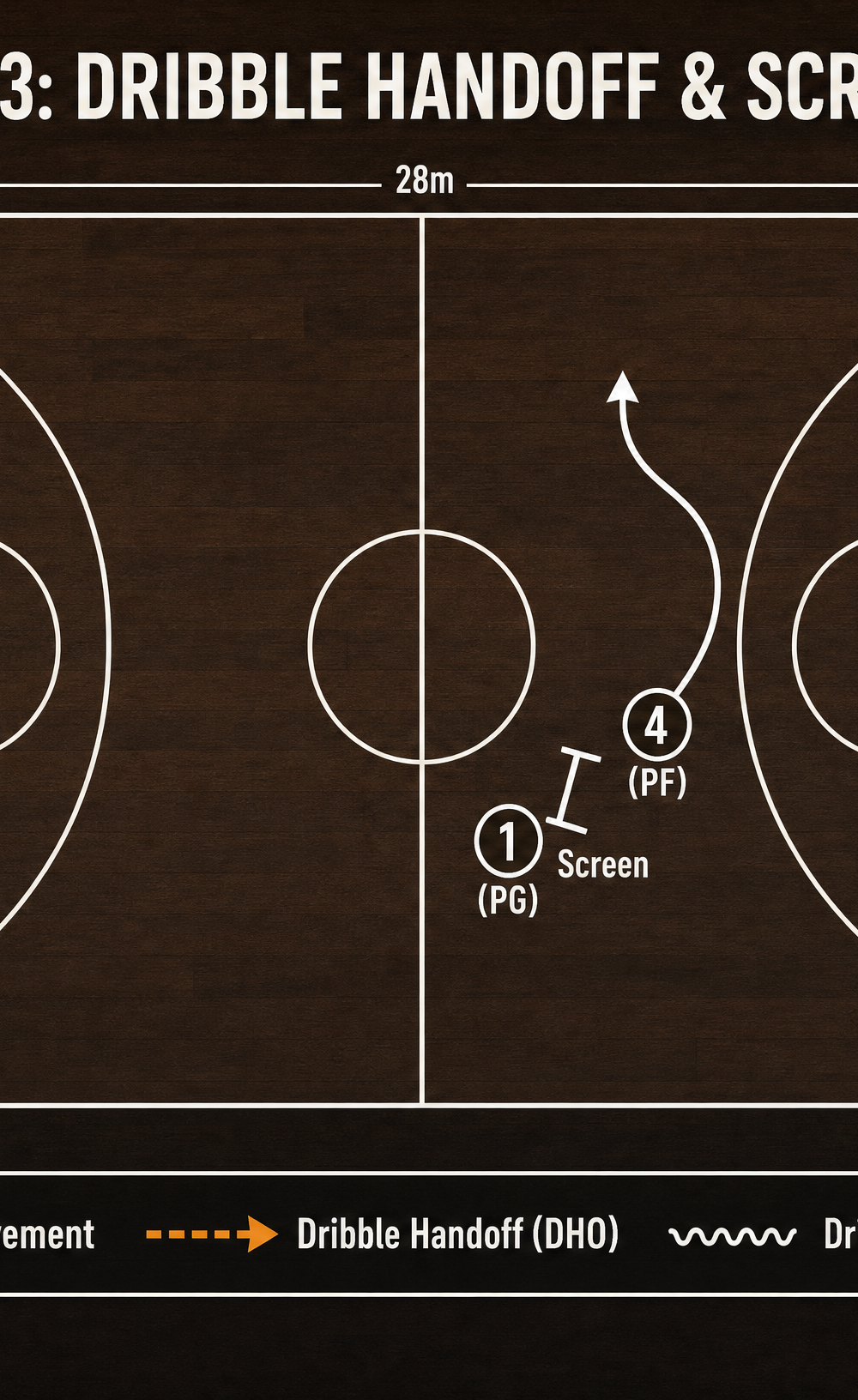
Court Dimensions: Standard FIBA Court (28m x 15m)
Equipment Needed: 1 Basketball, half-court or full-court setup.
Player Positions:
This is a positionless offense, but for the sake of structure, we will use standard numbering:
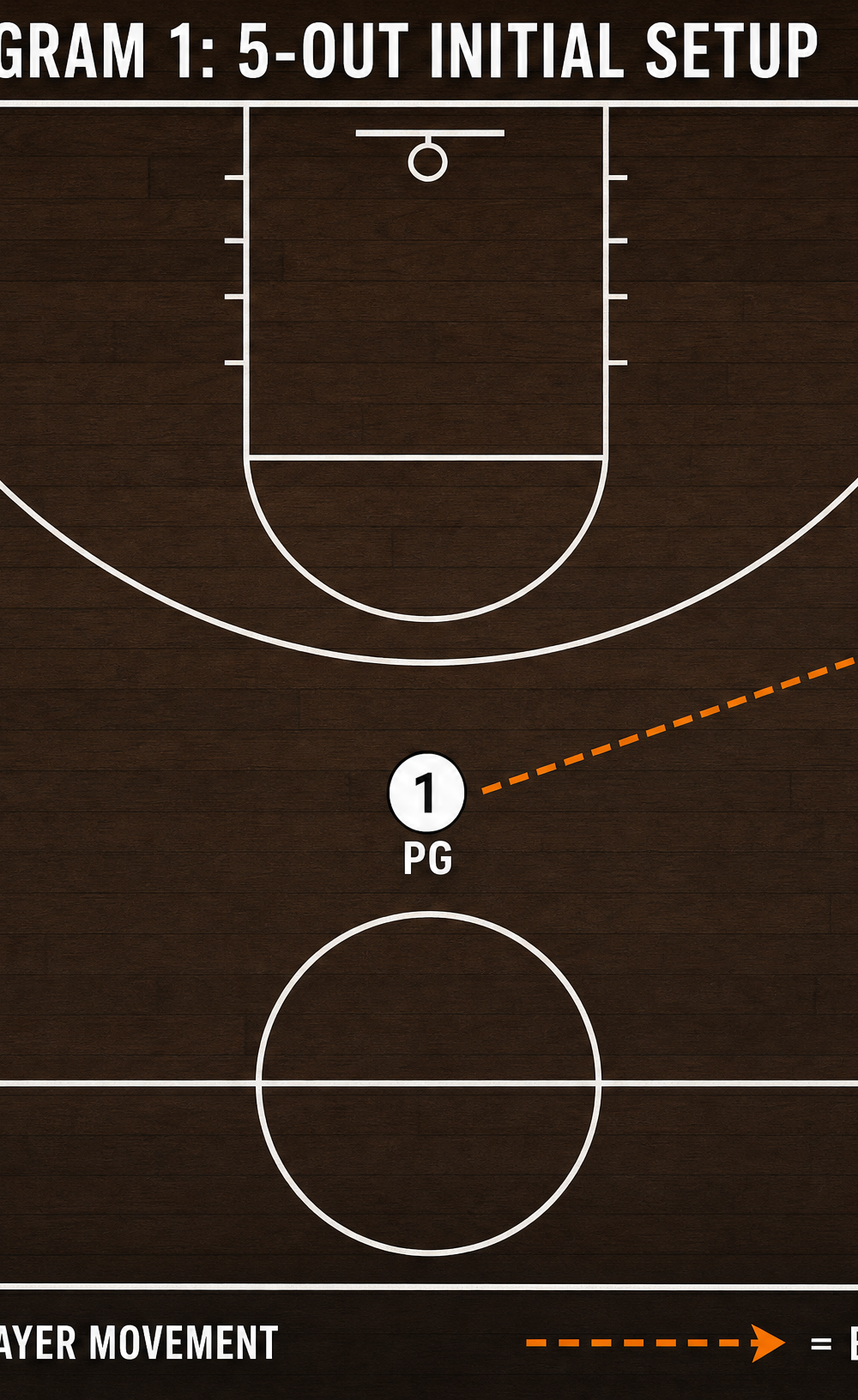
- 1 (Point Guard): Top of the key, initiating the offense.
- 2 (Shooting Guard): Right wing, free-throw line extended.
- 3 (Small Forward): Right corner.
- 4 (Power Forward): Left corner.
- 5 (Center): Left wing, free-throw line extended.
All players must start outside the three-point arc. The paint must remain completely empty to allow for cutting and driving.
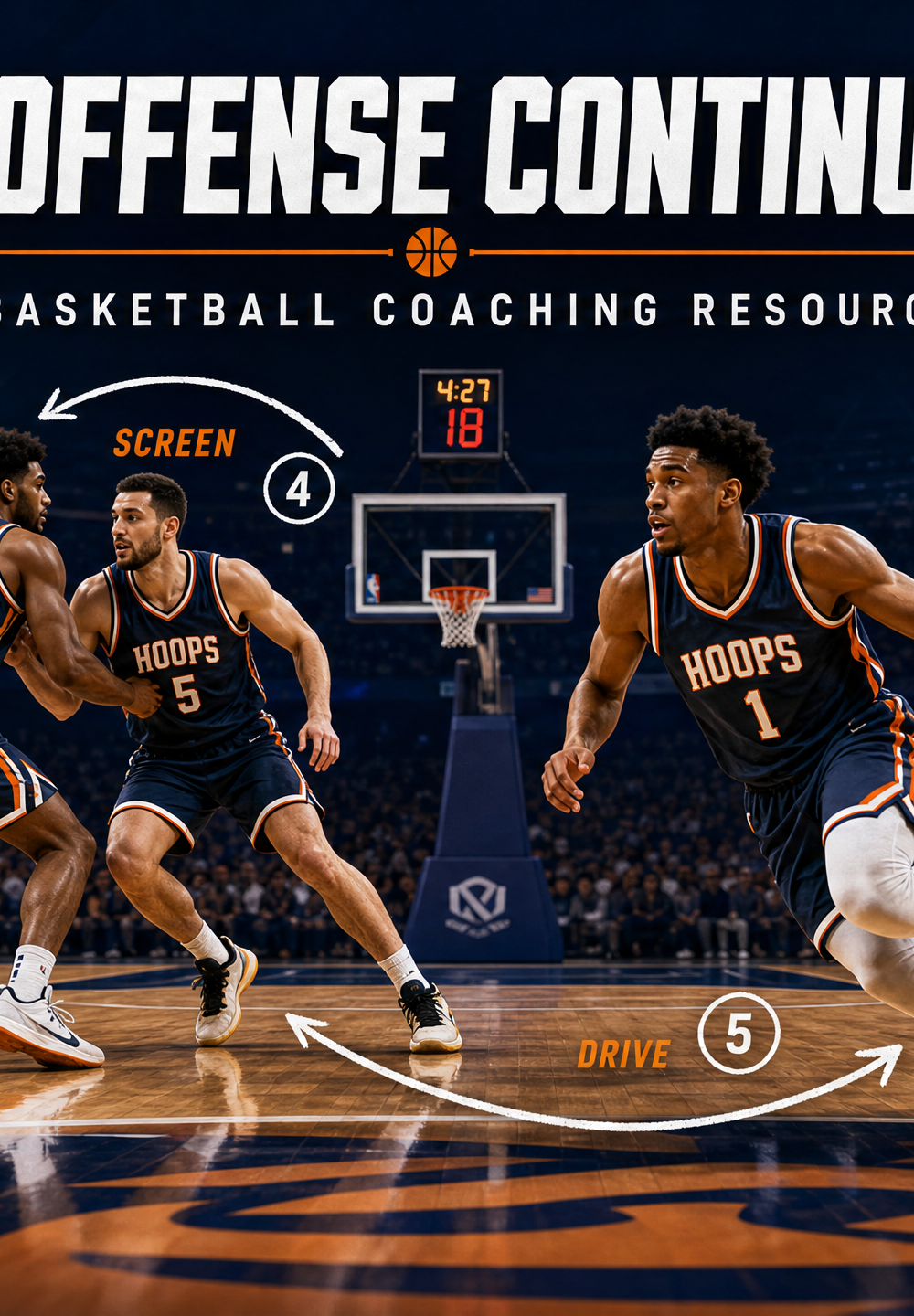
3. Step-by-Step Instructions
Action 1: The Initial Pass and Cut
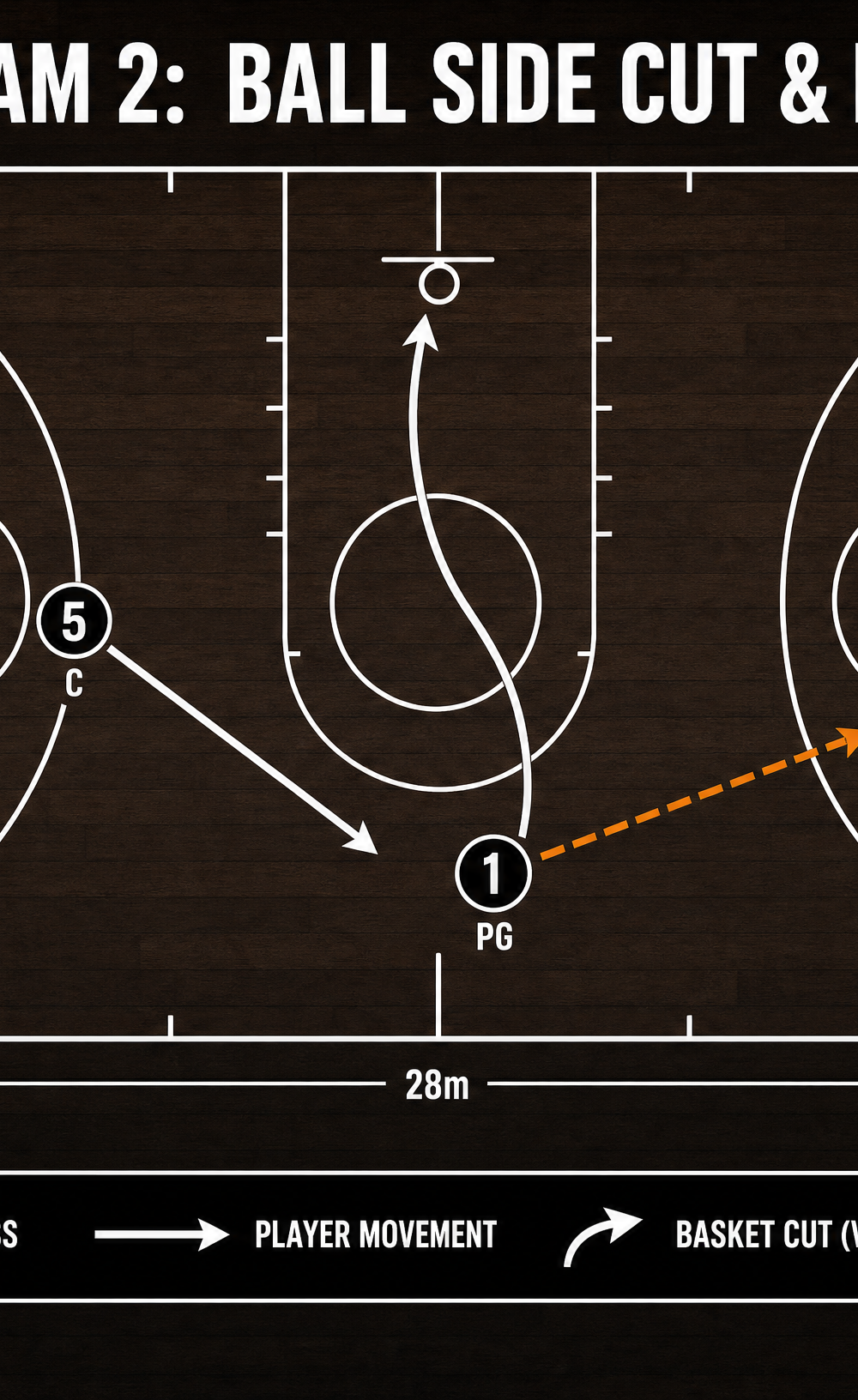
- Initiate: Player 1 brings the ball up the floor and establishes position at the top of the key. Players 2, 3, 4, and 5 are spaced out along the perimeter.
- Pass: Player 1 makes a sharp, direct pass to Player 2 on the right wing.
- Basket Cut: Immediately after passing, Player 1 makes a hard, explosive V-cut toward the basket, looking for a return pass (give-and-go).
- Read: If Player 1 is open, Player 2 passes the ball back for an easy layup. If denied, Player 1 clears out to the weak side.
Action 2: Fill and Replace
- Fill: As Player 1 clears the paint, the remaining perimeter players must rotate to fill the vacated spots.
- Rotate: Player 5 flashes to the top of the key to replace Player 1.
- Slide: Player 4 slides up from the left corner to the left wing to replace Player 5.
- Clear: Player 1, having finished their cut, fills the empty left corner.
- Maintain Spacing: Player 3 remains in the right corner, maintaining the 5-out structure.
Action 3: Dribble Handoff and Screen Away
- Dribble Attack: If Player 2 cannot pass inside, they initiate a dribble handoff (DHO) toward Player 3 in the right corner.
- Handoff: Player 3 sprints up to receive the handoff from Player 2, immediately looking to attack the basket off the edge.
- Screen Away: Simultaneously on the weak side, Player 1 (now on the left wing) sets a down screen for Player 4.
- Curl: Player 4 curls off the screen to the top of the key, providing a reversal option if Player 3's drive is stopped.
- Continuity: If no shot is available, the ball is reversed to the top of the key, and the pass-cut-fill rules begin again on the opposite side.
4. Key Coaching Points
- Hard Cuts: Every cut must be a sprint to the rim. Jogging through the lane allows the defense to recover and clogs the paint.
- Read the Defense: Players must be taught to read their defender. If the defender overplays the passing lane, the offensive player should immediately back-cut to the basket.
- Patience and Spacing: The offense relies on perfect spacing. Players must stay outside the three-point line until it is their turn to cut or screen. Do not drift inside.
- Pass Fakes: Encourage players to use pass fakes before making a pass. This shifts the defense and opens up passing lanes.
- Catch to Shoot: Every time a player catches the ball on the perimeter, they should immediately square up in a triple-threat position, ready to shoot, drive, or pass.
5. Common Mistakes
- Clogging the Paint: Players failing to clear out quickly after a cut, ruining the spacing for the next action.
- Standing and Watching: Players off the ball standing still instead of filling the empty spots immediately after a pass and cut.
- Weak Passes: Looping or slow passes that allow the defense to recover or intercept the ball. Passes must be crisp and direct.
- Ignoring the Cutter: The ball handler gets tunnel vision and fails to look at the player cutting to the basket, missing easy scoring opportunities.
6. Variations & Progressions
- Progression 1 (Screen Away): Instead of cutting to the basket after a pass, the passer immediately sets a screen away for a teammate on the opposite side of the court.
- Progression 2 (Dribble Entry): If the initial pass is denied, Player 1 can dribble at Player 2. Player 2 must immediately back-cut to the basket to maintain the continuity rules.
- Variation 1 (4-Out 1-In): Transition the offense by keeping one player (usually the 5) permanently stationed in the low post or high post area, altering the cutting angles.
7. Age Adaptations
- Under 10s: Focus purely on the 'Pass and Cut' rule. Do not introduce screens or handoffs yet. Emphasize spacing and passing mechanics.
- Under 12s/14s: Introduce the 'Fill and Replace' rules. Teach players how to read the defense and make back-cuts when denied.
- Under 16s/Open: Run the full continuity with dribble handoffs, screens away, and advanced reads. The offense should flow seamlessly without the coach calling plays.