Baseline Inbound: The 'Screen & Cut' Quick Hitter
A highly effective baseline out-of-bounds (BLOB) play designed to generate a quick layup or an open perimeter shot through decisive screening and cutting action.
Equipment Needed
Overview
The 'Screen & Cut' Quick Hitter is a staple baseline out-of-bounds (BLOB) play that capitalizes on defensive misdirection and solid screening fundamentals. This set play is designed to create an immediate scoring opportunity directly under the basket. By utilizing a back screen on the weak side, it forces the defense to make split-second decisions, often resulting in a high-percentage layup for the primary cutter. If the primary option is defended, the play seamlessly flows into secondary options, including a perimeter jump shot or a post entry, ensuring that the offense maintains pressure and flow.
This play is particularly effective against man-to-man defenses that tend to overplay the passing lanes or lose sight of weak-side cutters. It requires precise timing, solid screening technique, and a capable inbounder who can read the defense and deliver accurate passes.
Setup
Court Dimensions: Standard FIBA half-court (14m x 15m playable area for the half-court set).
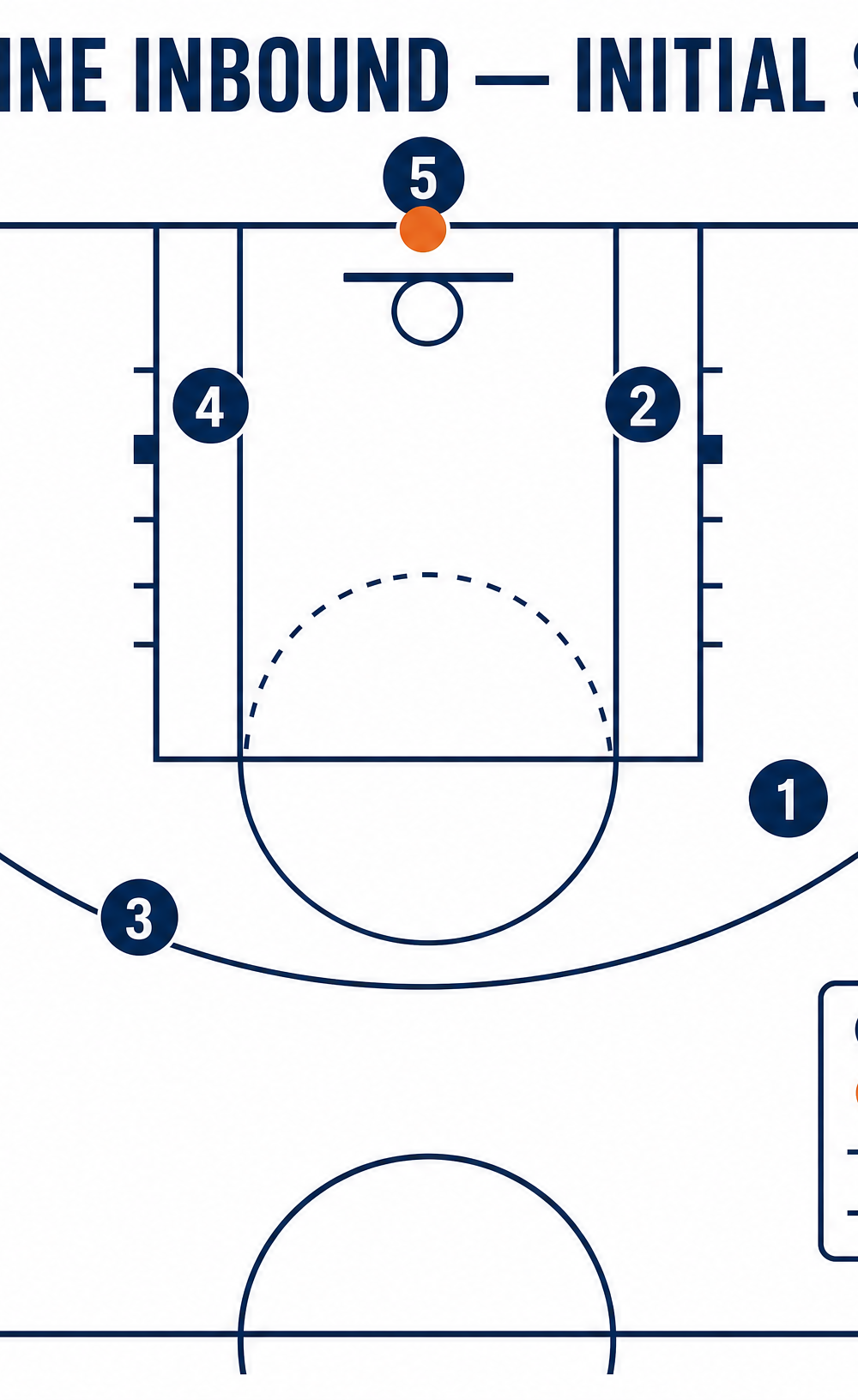
Player Positions:
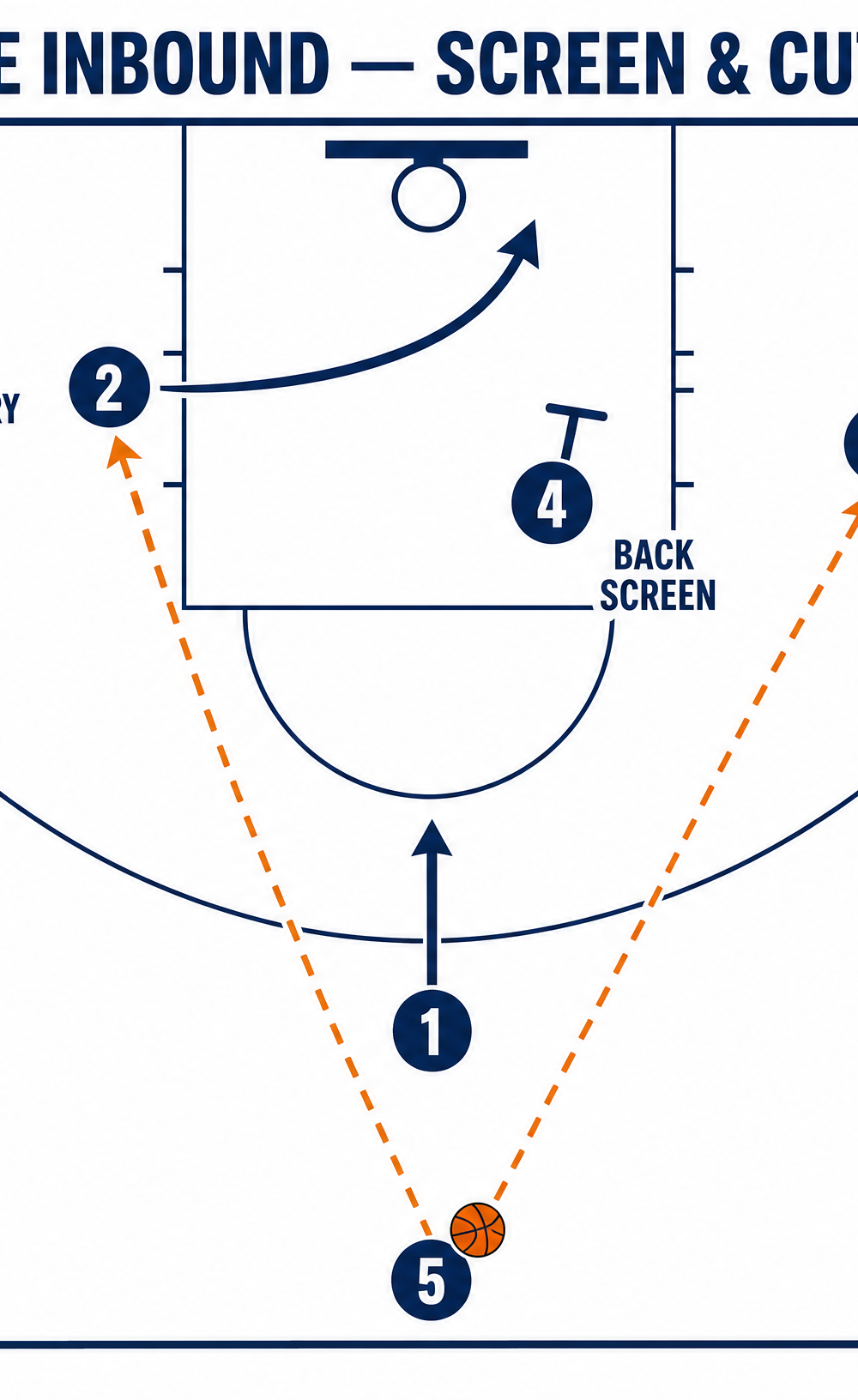
- Player 5 (Inbounder): Positioned out of bounds on the baseline, directly under the basket or slightly offset depending on the defensive alignment.
- Player 4 (Post/Screener): Positioned at the low post on the ball-side block (left side of the key in this example).
- Player 3 (Wing/Secondary Option): Positioned at the ball-side elbow or slightly extended toward the wing.
- Player 2 (Primary Cutter): Positioned at the weak-side block (right side of the key).
- Player 1 (Safety/Outlet): Positioned at the weak-side elbow or top of the key area, ready to receive a safety pass and initiate the half-court offense if the primary options fail.
Step-by-Step Instructions
- The Trigger: The play begins when Player 5 (the inbounder) slaps the ball or makes a pre-determined verbal call. All players must be stationary before the trigger to ensure legal screening and cutting.
- The Back Screen: Upon the trigger, Player 4 steps up from the ball-side low post and sets a solid back screen on the defender guarding Player 2. Player 4 must ensure their feet are set and they absorb the contact legally.
- The Primary Cut: Player 2 waits for the screen to be set, then cuts hard off Player 4's shoulder, sprinting directly toward the basket on the ball side. Player 2 must look for the ball immediately upon clearing the screen.
- The Secondary Movement: Simultaneously, Player 3 cuts from the ball-side elbow toward the ball-side corner to clear space and offer a secondary passing option.
- The Safety Outlet: Player 1 moves slightly toward the top of the key, maintaining spacing and providing a safe outlet pass if the inside options are covered.
- The Inbound Pass (Option 1): Player 5 reads the defense. If Player 2 is open on the cut, Player 5 delivers a crisp bounce pass or a direct chest pass leading Player 2 to the basket for a layup.
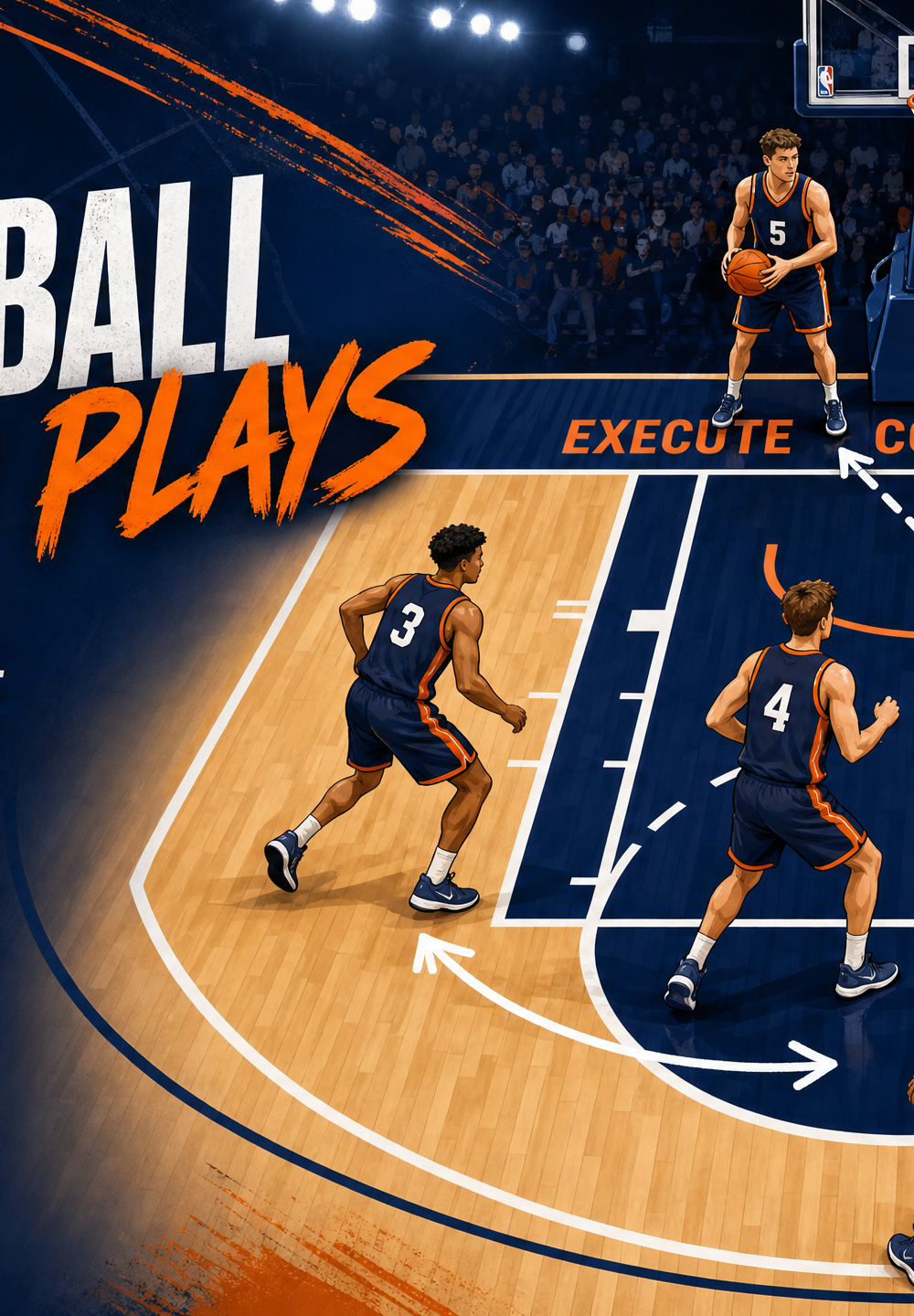
- The Secondary Options: If the primary cut by Player 2 is defended, Player 5 looks to the secondary options. Player 4, after setting the screen, can roll to the basket or establish deep post position. Player 3 is available in the corner or wing for a jump shot. Player 1 is the safety valve at the top of the key.
Key Coaching Points
- Timing is Everything: The cutter (Player 2) must wait until the screen is fully set before initiating the cut. Leaving too early ruins the spacing and allows the defense to recover.
- Screening Angle: Player 4 must set the back screen at the correct angle to force the defender to go over the top or get caught, opening up the path to the basket.
- Read the Defense: The inbounder (Player 5) is the quarterback of this play. They must be patient, read the defensive rotations, and avoid forcing a pass into tight coverage.
- Sell the Cut: Player 2 must cut with purpose and speed, simulating a scoring threat even if they are not the primary target, which forces the defense to react.
- Maintain Spacing: Players 1 and 3 must execute their movements precisely to draw defenders away from the primary action area in the paint.
Common Mistakes
- Moving Screens: Player 4 failing to establish a stationary position before contact, resulting in an offensive foul.
- Poor Passing Angles: The inbounder (Player 5) throwing a lob pass that hangs in the air, allowing the defense to recover and intercept.
- Rushing the Play: The cutter (Player 2) moving before the screen is set, negating the advantage.
- Lack of Eye Contact: The inbounder and the cutter failing to make eye contact before the pass is thrown, leading to turnovers.
Variations & Progressions
- Slip the Screen: If the defense anticipates the back screen and attempts to cheat over the top, Player 4 can 'slip' the screen and dive immediately to the basket for a quick pass.
- Screen the Screener: After Player 4 sets the initial screen for Player 2, Player 3 can set a down screen for Player 4 to pop out for a mid-range jump shot.
- Zone Adjustment: Against a zone defense, the initial setup remains similar, but the screening angles adjust to target the gaps in the zone rather than specific defenders.
Age Adaptations
- Under 10s: Focus heavily on the fundamentals of the pass from the inbounder and a simple straight cut. The back screen might be too complex; replace it with a simple V-cut to get open.
- Under 12s/14s: Introduce the back screen, emphasizing legal screening technique and the timing of the cut. Ensure the inbounder practices different types of passes (bounce, chest, overhead).
- Under 16s/Open: Execute the full play with all variations. Emphasize reading the defense, slipping screens, and flowing seamlessly into the half-court offense if the initial options fail.