Mastering the Death Overs: The Yorker-Focused Bowling Plan
Equip your bowlers with a structured tactical plan to execute yorkers under pressure, set the right fields, and close out the innings effectively.

Equipment Needed
1. Overview
The final overs of a limited-overs cricket match—the 'death overs'—are often where games are won and lost. Batsmen are looking to clear the ropes, and bowlers are under immense pressure to execute their skills. This set play focuses on the most effective weapon in a fast bowler's arsenal: the yorker.
By combining precise execution of the yorker with strategic field placements and calculated variations, this plan aims to restrict scoring, induce errors, and secure crucial wickets. It provides coaches with a clear framework to train their bowlers to handle the pressure of the death overs with clarity and confidence.
2. Setup
To run this set play effectively in a training environment, you will need the following setup:
- Equipment: 10-15 cricket balls (preferably older balls to simulate match conditions), target cones or markers (flat discs work best), stumps at both ends.
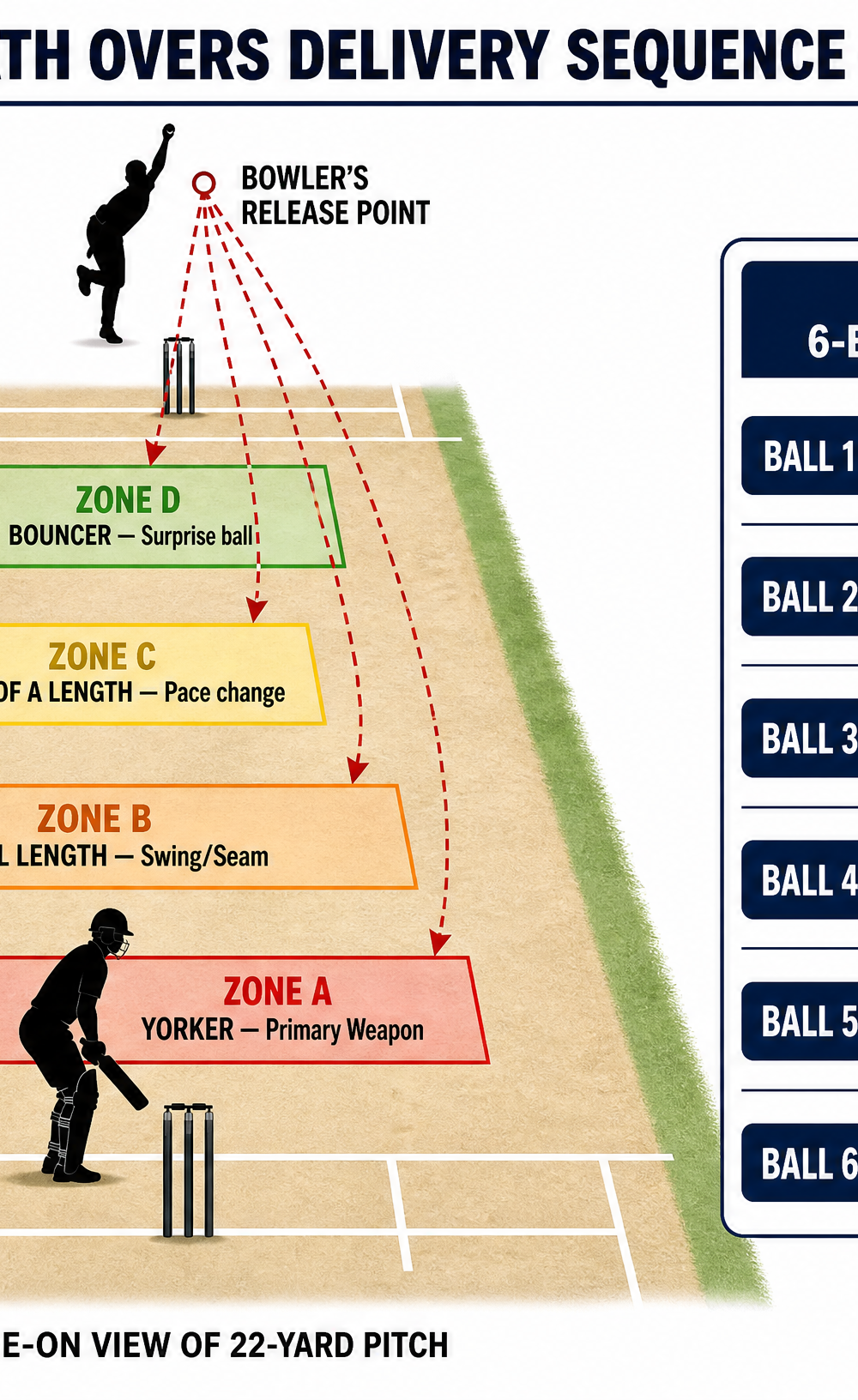
- Pitch Setup: Use a standard 22-yard pitch. Place target markers at the popping crease to define the yorker landing zone (Zone A).
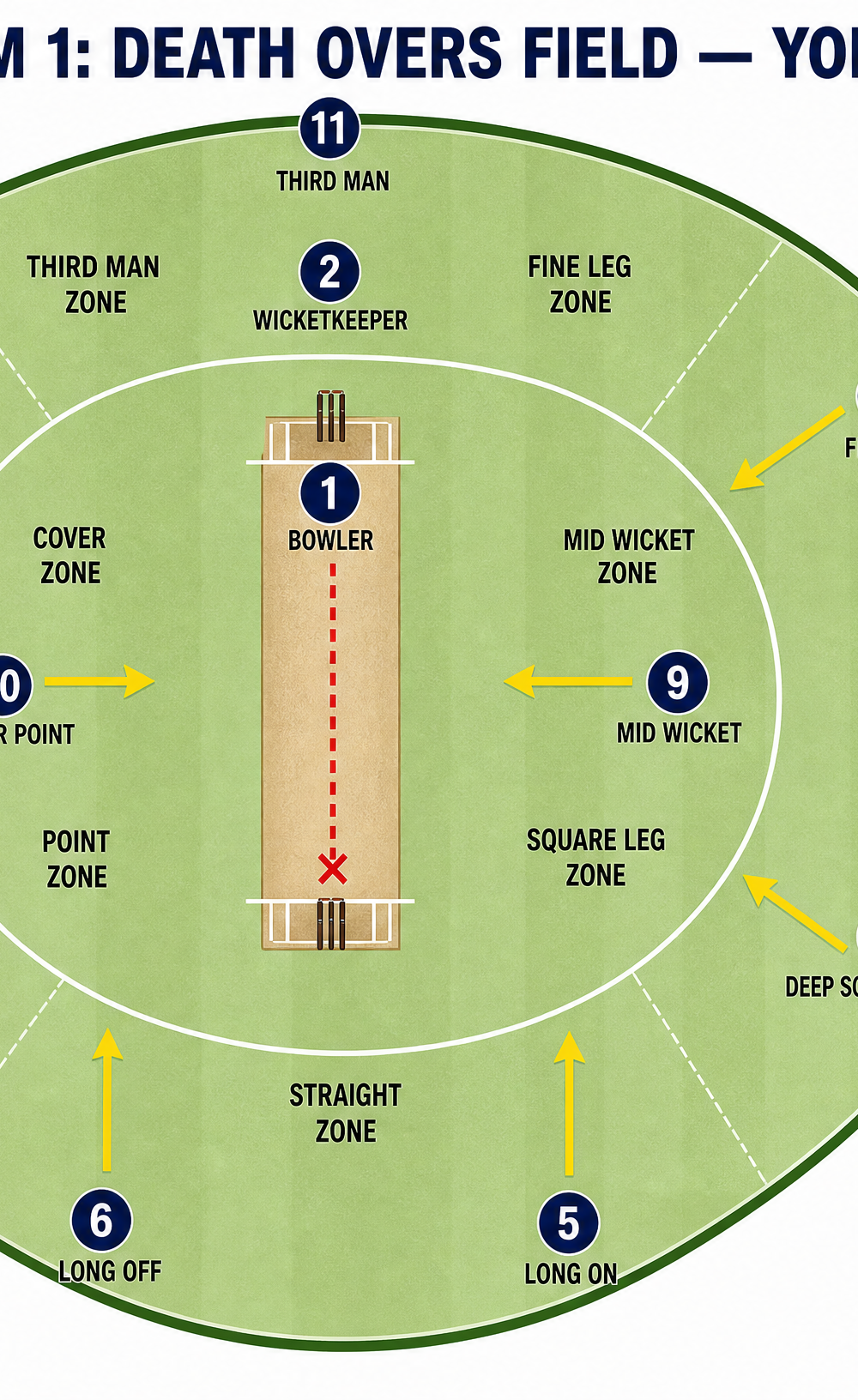
- Field Setup: Set an attacking death overs field as shown in Diagram 1.

Player Positions (Yorker Plan):
- Bowler: Top of the pitch.
- Wicketkeeper: Standing back to the fast bowler.
- Fine Leg: Deep on the leg-side boundary to cover the scoop or paddle sweep.
- Deep Square Leg: On the boundary to protect against the slog sweep or pull.
- Long On: Straight boundary to stop the straight drive.
- Long Off: Straight boundary on the off-side.
- Deep Cover: On the boundary to protect the square drive.
- Deep Point: On the boundary to stop the cut or wide yorker slice.
- Mid Wicket: Inside the ring to stop the single and pressure the batsman.
- Cover Point: Inside the ring on the off-side.
- Third Man: On the boundary to cover the edge or reverse ramp.
3. Step-by-Step Instructions
Follow these steps to implement the death overs bowling plan:
- Establish the Base (The Yorker): The primary objective is to land the ball consistently in the 'Zone A' (0-1 metre from the popping crease). Instruct the bowler to aim for the batsman's toes or the base of the stumps.
- Set the Field: Deploy the field as outlined in Diagram 1. Ensure the boundary riders are pushed right back to the rope to maximize protection.
- Execute the Sequence: Have the bowler bowl a 6-ball over, following the recommended sequence shown in Diagram 2. This sequence is designed to keep the batsman guessing while relying heavily on the yorker.
- Introduce Variations: Once the base yorker is established, introduce variations such as the slower ball or the bouncer to disrupt the batsman's rhythm.
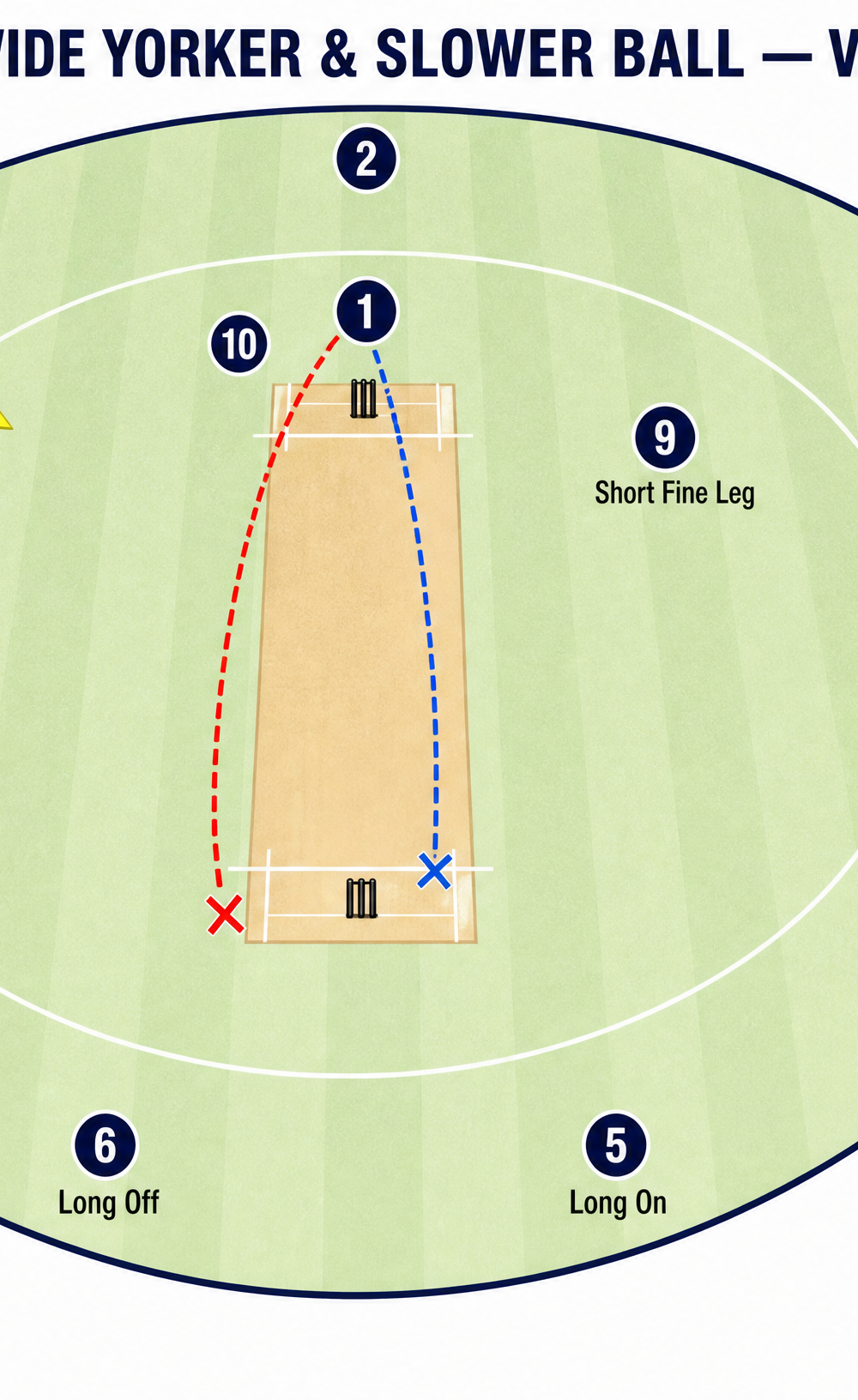
- Adapt the Field: If the bowler intends to bowl a wide yorker or a slower ball, adjust the field accordingly (see Diagram 3). Move fielders to protect the areas where the ball is most likely to be hit.
- Review and Refine: After each over, review the execution with the bowler. Discuss what worked, what didn't, and how to adjust the plan for the next over.
4. Key Coaching Points
- Visual Focus: The bowler must pick a specific target (e.g., the base of middle stump or the batsman's front toe) and maintain intense visual focus on that spot throughout the delivery stride.
- Arm Speed: Even when bowling slower variations, the bowler must maintain arm speed to deceive the batsman. A slow arm action will give the variation away.
- Commitment: The bowler must commit 100% to the chosen delivery. Hesitation or second-guessing will lead to poor execution.
- Field Awareness: The bowler must be aware of the field placement and bowl to the field. For example, if third man is up in the ring, the bowler should avoid bowling wide and short.
- Breathing and Composure: Teach the bowler to take a deep breath and clear their mind before starting their run-up. Composure under pressure is crucial.
5. Common Mistakes
- Missing the Length (Full Toss or Half-Volley): This is the most common and costly mistake. A missed yorker often results in a boundary. Focus on getting the length right, even if the line is slightly off.
- Telegraphing Variations: Changing the grip or run-up too early, which alerts the batsman to the slower ball or bouncer.
- Bowling to the Wrong Field: Bowling a wide yorker with third man up, or bowling a bouncer with fine leg inside the ring.
- Losing Focus Under Pressure: Allowing the match situation or the batsman's movements to distract the bowler from their execution plan.
6. Variations & Progressions
- The Wide Yorker: Aim for the wide guideline outside off stump. This is effective against batsmen who like to hit straight or leg-side. Adjust the field by bringing fine leg up and pushing third man back.
- The Slower Ball Bouncer: A highly effective variation that disrupts the batsman's timing and often results in a catch in the deep.
- Pressure Simulation: Introduce a 'match scenario' during training. For example, tell the bowler they need to defend 10 runs off the final over.
- Target Practice: Use target cones and assign points for hitting the yorker zone. This adds a competitive element to training.
7. Age Adaptations
- Under 10s / Under 12s: Focus purely on bowling straight and full. Do not introduce complex variations or field settings. Use softer balls if necessary.
- Under 14s / Under 16s: Introduce the basic yorker and one variation (e.g., a simple slower ball). Begin teaching basic field placements for the death overs.
- Open / Seniors: Implement the full plan, including advanced variations, complex field settings, and high-pressure match simulations.