Mastering Spin Bowling Variations: The Target Zone Drill
A high-intensity accuracy drill designed to help spin bowlers develop consistency, perfect their stock delivery, and confidently execute variations under pressure.

Equipment Needed
1. Overview
Spin bowling is an art form that relies heavily on consistency, deception, and the ability to land the ball in precise areas. The Spin Bowling Variations: Target Zone Drill is a foundational yet highly adaptable exercise designed to help spinners—both off-spin and leg-spin—master their line and length.
By incorporating visual target zones on the pitch, this drill provides immediate feedback to the bowler. It transitions players from simply 'bowling in the nets' to bowling with absolute purpose. This resource is perfect for pre-season skill building or mid-season refinement, allowing coaches to assess a bowler's stock delivery before introducing complex variations like the arm ball, the googly, or the top-spinner.
2. Setup
To run this drill effectively, you will need a standard 22-yard cricket pitch (either turf or synthetic) and the following equipment:
- 1 set of stumps at the batting end (and optionally at the bowling end for the bowler's visual alignment).
- 3 distinct coloured cones or flat markers (e.g., Yellow, Orange, Purple).
- A bucket of 12-18 quality cricket balls (match condition preferred to simulate game feel).
- Measuring tape (optional, to measure exactly 4-6 metres from the batting crease).
Pitch Layout:
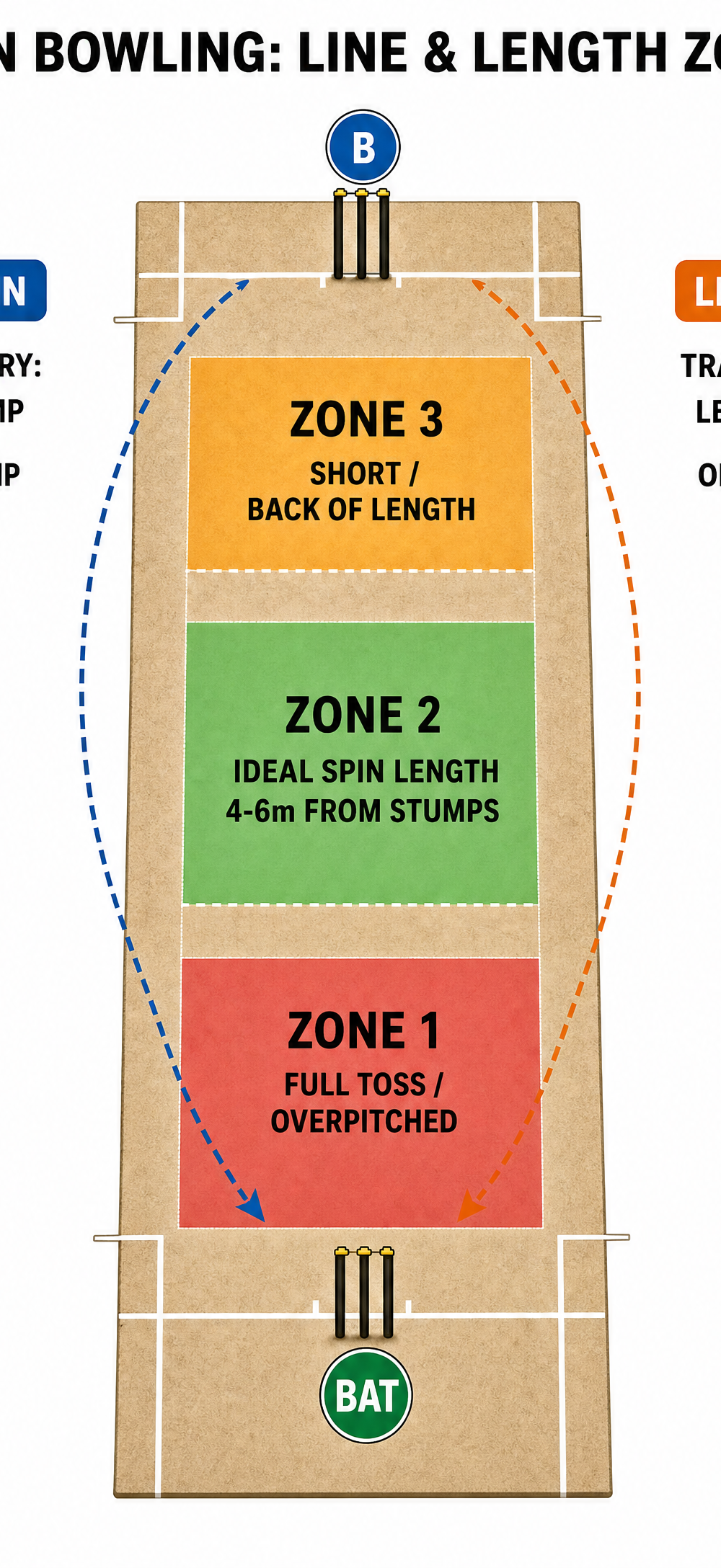
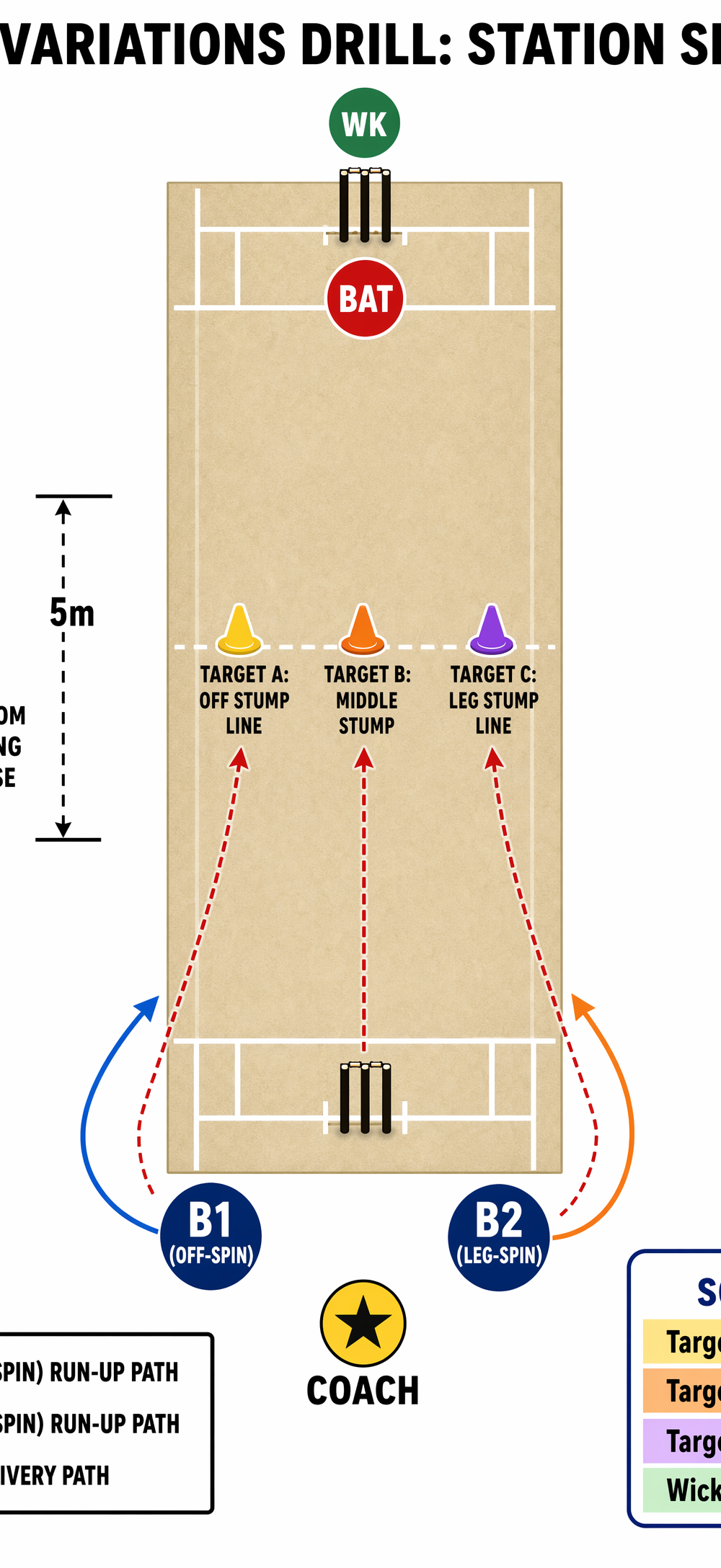
Place the target markers on the pitch approximately 4 to 6 metres from the batting crease. This is the optimal 'good length' for a spinner, forcing the batter into an indecisive position—neither comfortably forward nor fully back.
- Target A (Yellow): Placed on the off-stump line.
- Target B (Orange): Placed on the middle-stump line.
- Target C (Purple): Placed on the leg-stump line.
Player Positions:
- Bowler (B): Starts at the top of their run-up at the bowling crease.
- Wicket-Keeper (WK): Standing up to the stumps at the batting end.
- Batter (BAT): (Optional progression) Stands in the crease for a realistic sightline.
- Coach: Positioned behind the bowler or at square leg.
3. Step-by-Step Instructions
- Warm-up and Alignment: Bowl 6 deliveries of stock ball without targets to find natural rhythm.
- Target Declaration: Coach calls a specific target before each delivery.
- Execution: Bowler attempts to land as close to the called target as possible.
- Feedback Loop: Keeper and coach provide immediate feedback on length, line, and turn.
- Introducing Variations: Once consistent (4/6 on target), introduce a variation delivery.
- The Pressure Over: Bowler declares intended target and delivery type before each ball. Score points for accuracy.
4. Key Coaching Points
- Strong Action at the Crease: Full pivot on the front foot and drive the non-bowling arm down aggressively.
- Visual Focus: Fixate on the target cone during approach and release.
- Flight and Dip: Give the ball air — flight creates dip, which deceives the batter.
- Consistent Release Point: Variations must be bowled from the same arm angle and speed as the stock delivery.
- Follow-Through: Complete follow-through towards the target area.
5. Common Mistakes
- Bowling Too Fast: Sacrificing flight and turn for accuracy.
- Changing the Action for Variations: Altering arm speed acts as a 'tell' for the batter.
- Overpitching: Consistently missing the 4-6m zone due to late release.
- Ignoring the Wicket-Keeper: Failing to use the keeper's unique perspective for feedback.
6. Variations & Progressions
- The Blindfold Call: Target is called during the delivery stride, forcing reactive adjustments.
- Active Batter: Batter plays shots; bowler must adjust targets based on batter's movements.
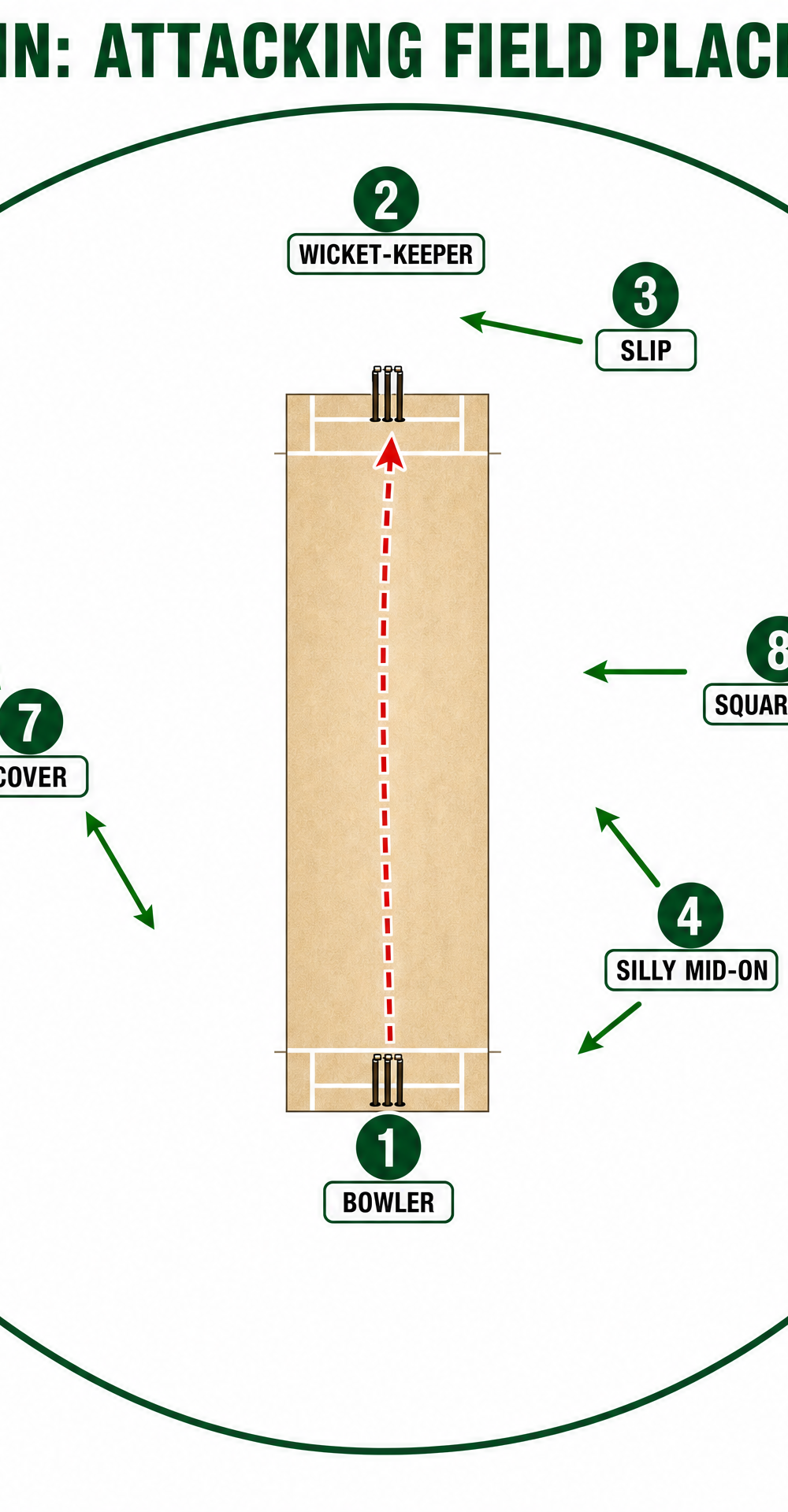
- Field Setting Integration: Set a specific field and bowl to it.
7. Age Adaptations
- Under 10s / Under 12s: Remove variations. Focus on hitting a single larger target (hula hoop) with the stock delivery.
- Under 14s / Under 16s: Introduce one variation. Begin scoring pressure overs competitively.
- Open / Senior: Full implementation with high accuracy demands and game-scenario pressure.