Dynamic Crossing and Finishing Masterclass
Develop ruthless efficiency in the final third with this high-intensity crossing and finishing drill designed to improve timing, delivery, and goal-scoring instincts.
Equipment Needed
1. Overview
The Dynamic Crossing and Finishing Masterclass is a high-intensity attacking drill designed to replicate match-realistic scenarios in the final third. This session focuses on the relationship between wide players (wingers and full-backs) and central attackers. It aims to improve the quality of wide deliveries while simultaneously sharpening the movement, timing, and finishing techniques of strikers arriving in the penalty area. Use this drill when your team is struggling to convert wide possession into high-quality goal-scoring opportunities or when you need to refine attacking patterns against a low block.
2. Setup
Pitch Dimensions: Use the attacking half of a standard pitch (approx. 50m x 68m). Focus play around the 18-yard box and the wide channels.
Equipment Needed:
- 1 Full-size goal
- 8-10 Cones (to mark wide channels and starting positions)
- 10-15 Footballs (stationed at the starting points to ensure high tempo)
- 2 sets of bibs (if introducing defenders)
Player Positions:
- 1 Goalkeeper (GK): In goal.
- 2 Wide Players (RW/LW or RB/LB): Positioned in the wide channels, starting 30-35m from the byline.
- 2-3 Central Attackers (CF/AM): Starting centrally, 35-40m from goal, ready to make runs into the box.
- (Optional) 1-2 Central Defenders (CB): To add progressive opposition.
3. Step-by-Step Instructions
Phase 1: Unopposed Wide Delivery
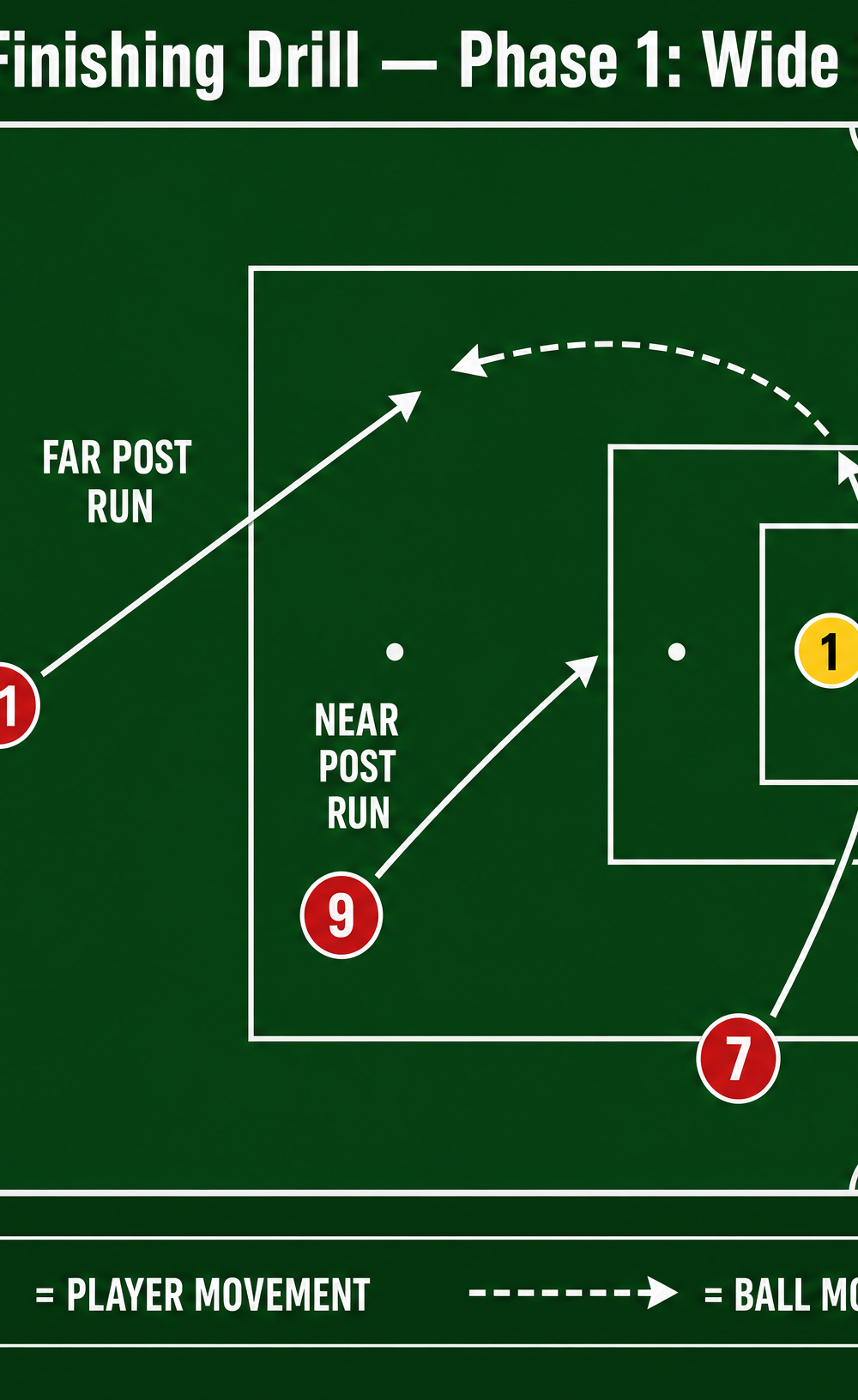
- Initiate the Attack: The drill begins with a central midfielder (or the coach) playing a firm pass out to the wide player (e.g., the Right Winger - 7) in the marked 10m wide channel.
- The Touch and Drive: The winger takes a positive first touch out of their feet and drives down the line at pace towards the byline.
- Attacking Runs: As the winger approaches the delivery zone (the final 15m before the byline), the central attackers (9 and 11) trigger their runs. The number 9 attacks the near post area, while the number 11 arcs their run towards the far post.
- The Delivery: The winger delivers a cross into the 'danger zone' (between the penalty spot and the six-yard box). The type of cross (driven, lofted, cut-back) should vary based on the attackers' movements.
- The Finish: The attackers must finish first-time if possible, prioritising accuracy over raw power. The goalkeeper attempts to save or intercept the cross.
- Reset: Immediately reset and alternate the attack to the opposite flank.
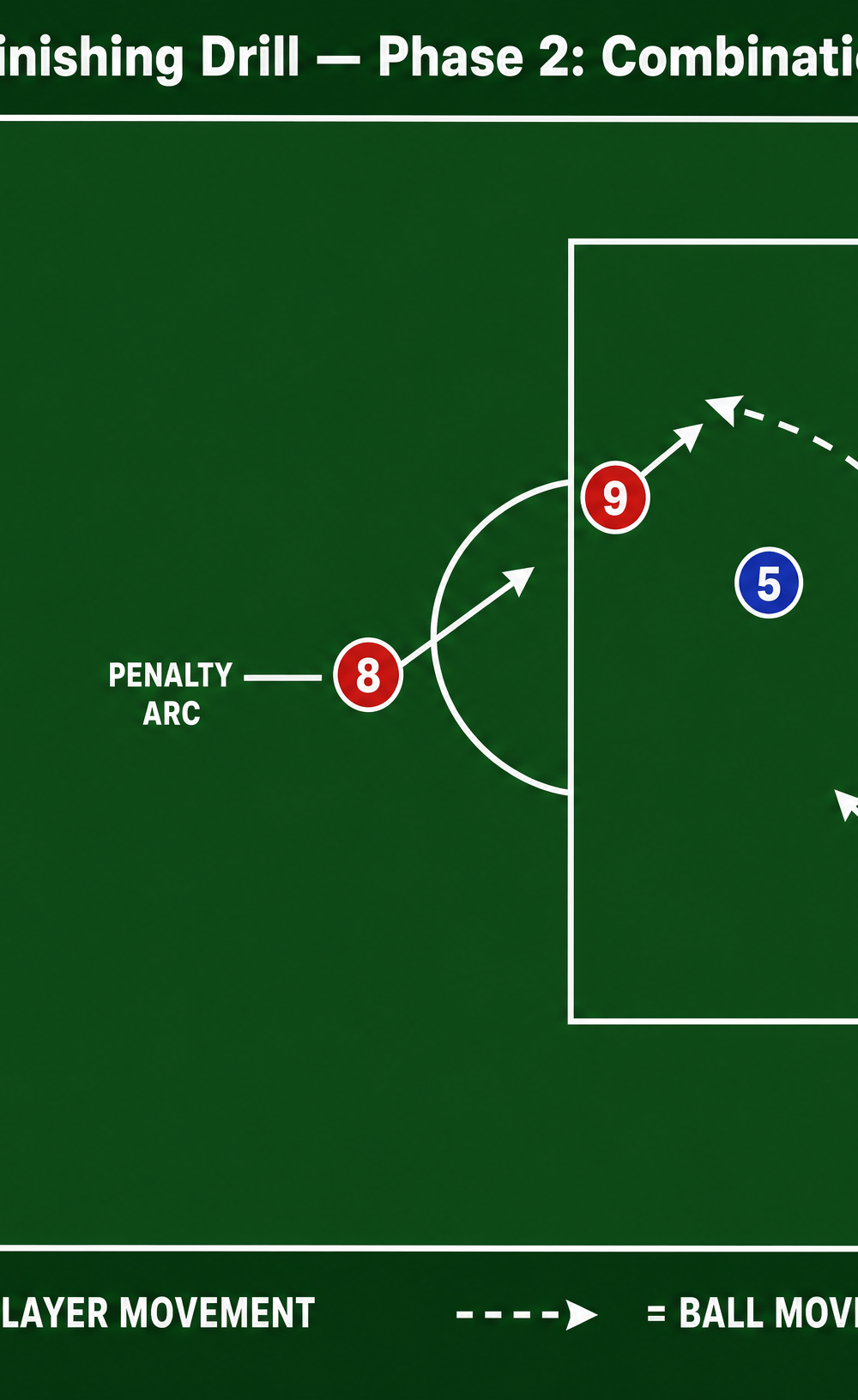
Phase 2: Combination Play and Defender Introduction
- Overlapping Run: Introduce a full-back (e.g., Right Back - 2). The winger (7) receives the ball and drives inside, creating space for the full-back to make an overlapping run down the flank.
- The Pass: The winger slips a perfectly weighted pass into the path of the overlapping full-back.
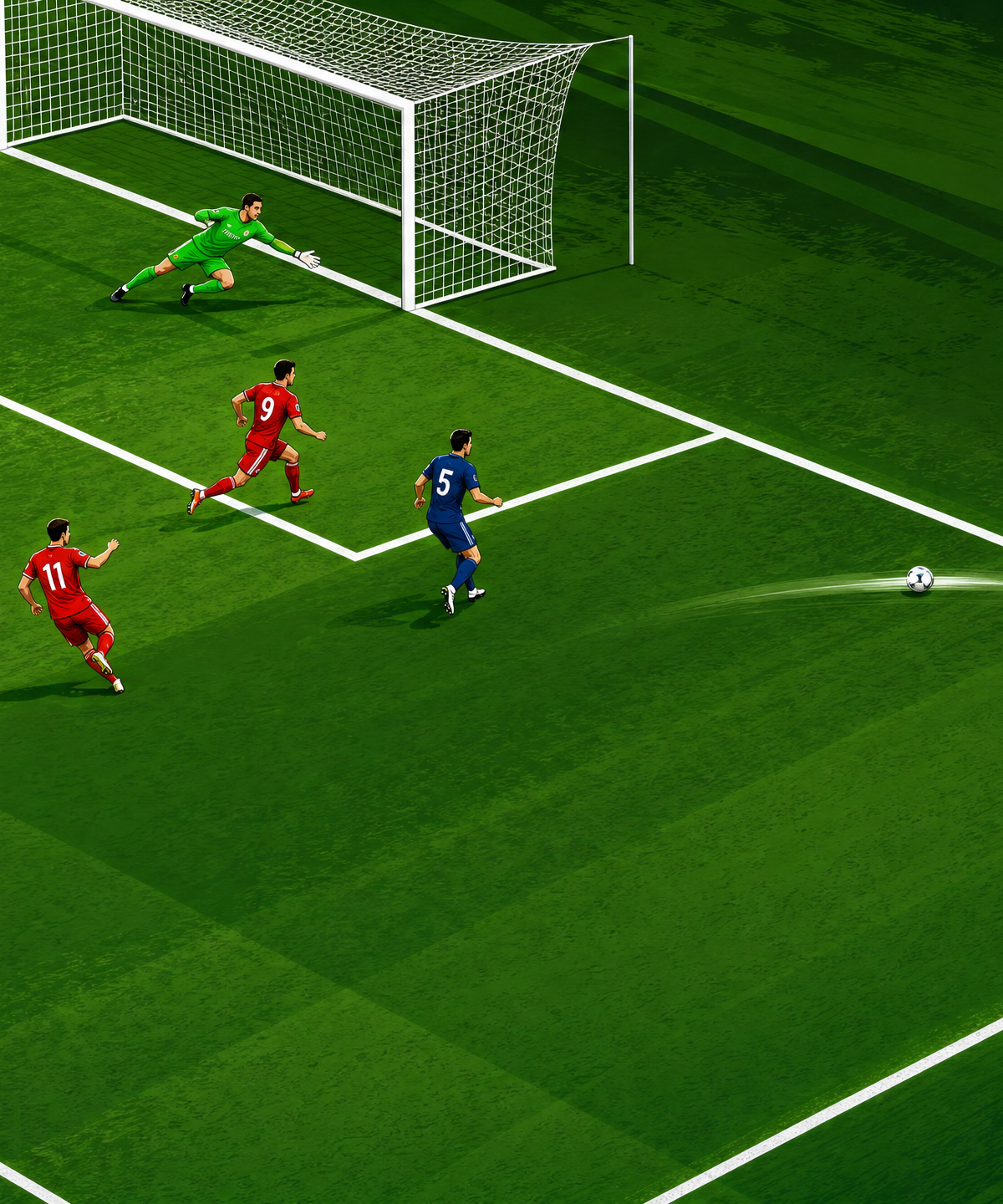
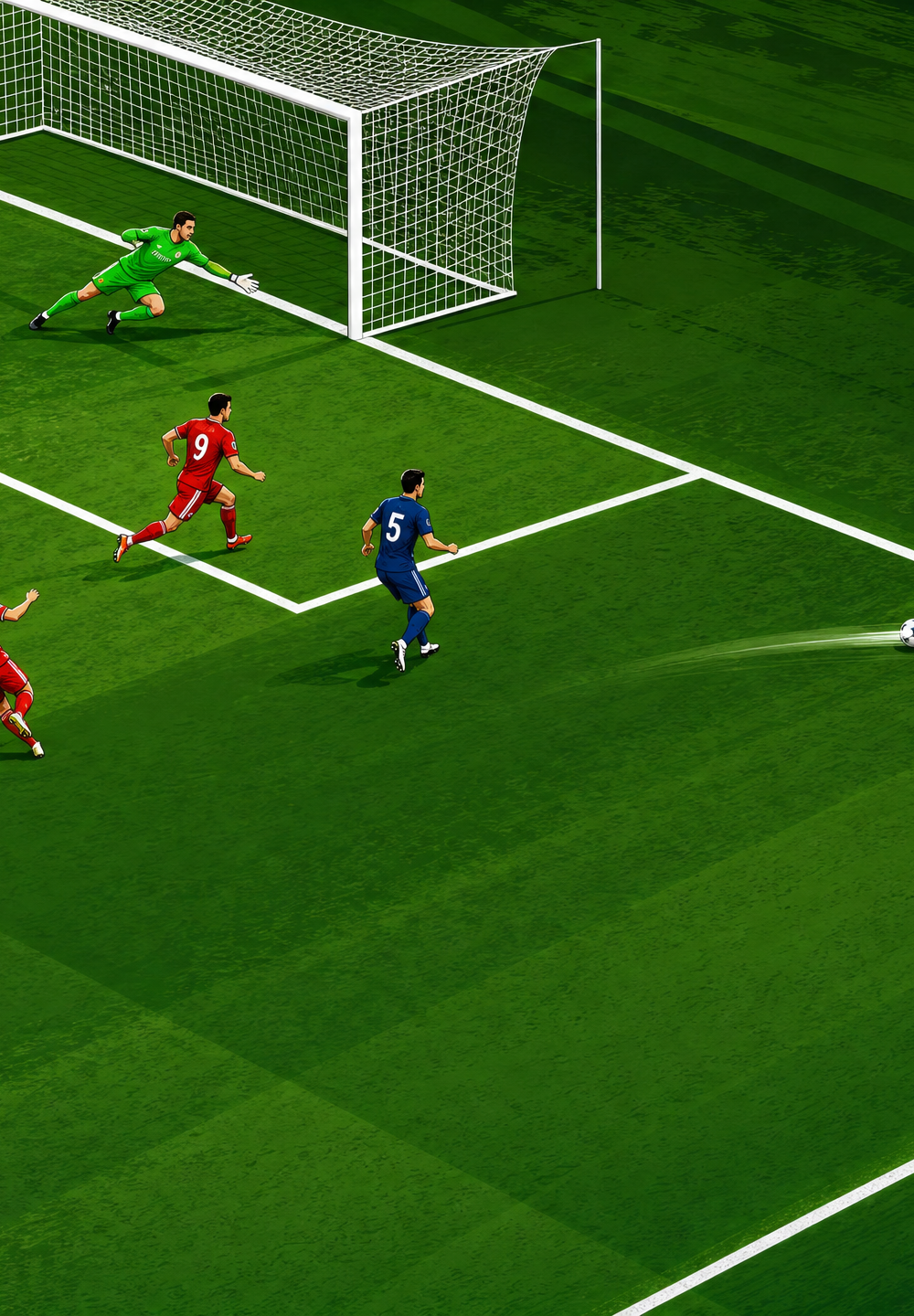
- Active Defending: Introduce a Central Defender (5) into the penalty area. The defender must track the runs of the central attackers (9 and 8) and attempt to clear the incoming cross.
- Delivery and Finish: The full-back delivers the cross under pressure. The attackers must use double movements (e.g., checking away before darting near post) to lose the defender and finish.
Phase 3: Continuous Double Flank Attack
- High Tempo Sequence: The drill now runs continuously from both sides. As soon as an attack finishes on the right, a new ball is immediately played to the left flank.
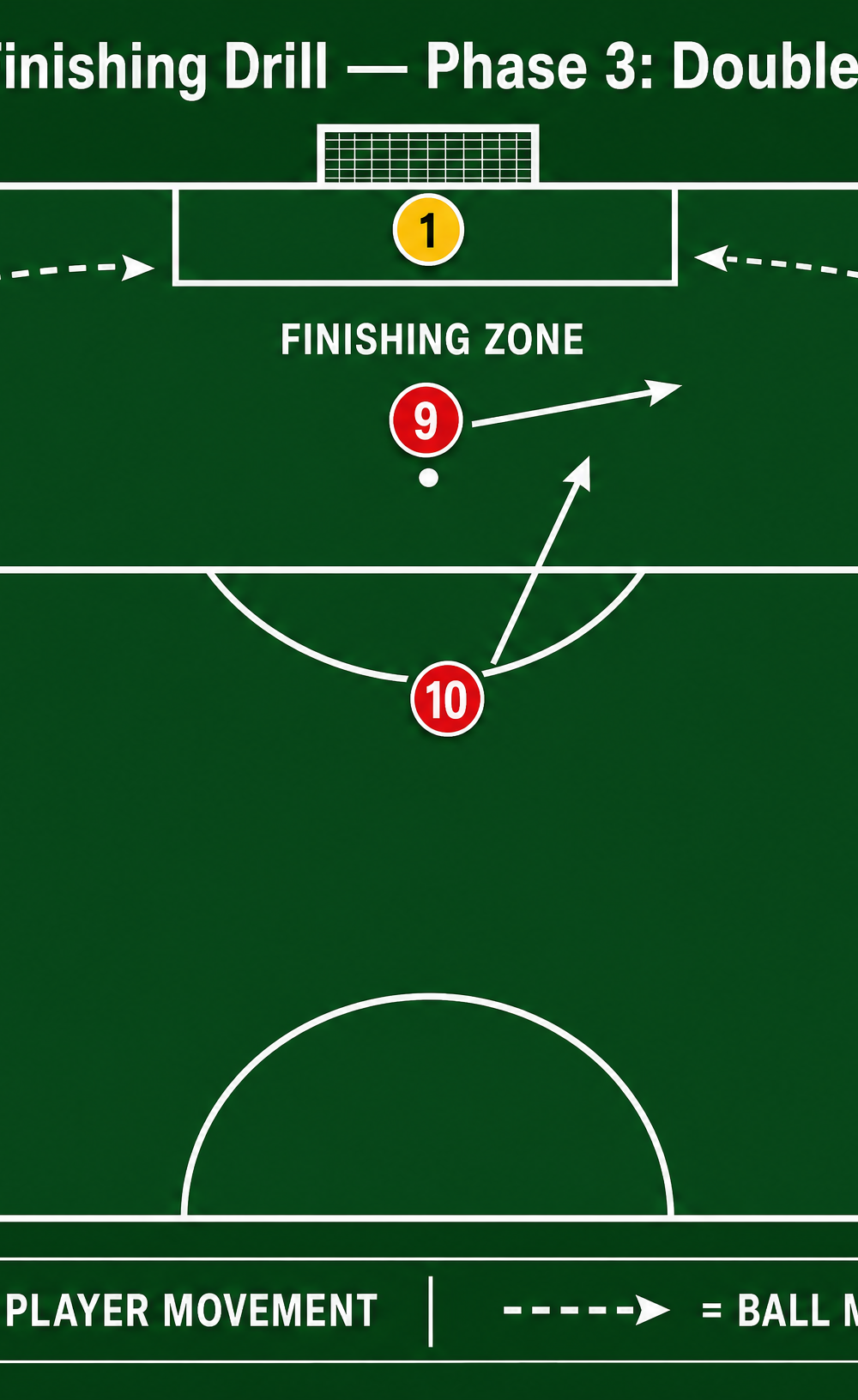
- Multiple Runners: Incorporate an Attacking Midfielder (10) making a late run to the edge of the penalty area for cut-backs.
- Transition: If the goalkeeper catches the cross or the defender clears it, they must immediately distribute the ball to one of the wide starting positions to trigger a counter-attack simulation.
4. Key Coaching Points
- Quality of Delivery: Emphasise the importance of looking up before crossing. The wide player must pick out a specific run, not just 'put it in the mixer'. Focus on the mechanics: head over the ball for a driven cross, leaning back slightly for a lofted ball.
- Timing of the Run: Attackers must not arrive too early. The trigger to sprint into the box is when the wide player takes their final touch to set themselves for the cross. Arriving late at pace is harder to defend than waiting in the box.
- Zonal Occupation: Ensure all key areas are attacked: near post, far post, and the penalty spot (cut-back). Attackers must communicate to avoid making the same run.
- First-Time Finishing: Encourage attackers to use the pace of the cross. Guide the ball into the corners rather than slashing at it wildly. Use the inside of the foot for precision.
- Aggressive Goalkeeping: The goalkeeper must be proactive, commanding their six-yard box and communicating clearly if they are coming to claim the cross.
5. Common Mistakes
- Crossing Blind: Wide players hitting the ball into the box without looking up to assess the attackers' positions. Correction: Demand a quick glance up before the final striking action.
- Static Attackers: Strikers standing in the box waiting for the ball. Correction: Enforce dynamic movement; attackers must start outside the box and sprint in on the trigger.
- Poor First Touch out Wide: Wide players taking the ball backwards or stopping the momentum of the attack. Correction: Drill the 'positive first touch' that takes the player forward into space.
- Overcrowding the Near Post: Multiple attackers making the same run, making it easy for the defender to clear. Correction: Assign specific zones (near, far, cut-back) before the drill starts.
6. Variations & Progressions
- Progression 1: 2v1 Out Wide: Add an opposing full-back to defend the wide channel. The winger and overlapping full-back must use 1-2s or overlapping runs to create the crossing opportunity.
- Progression 2: Time Limit: Give the attacking team exactly 8 seconds from the first pass to get a shot away. This forces game-realistic urgency.
- Variation 1: The Cut-Back Focus: Mandate that all crosses must be cut-backs to the edge of the area. This is excellent for teams facing low blocks.
- Variation 2: Opposite Flank Finish: The cross must bypass the central strikers and be finished by the opposite winger arriving at the far post.
7. Age Adaptations
- Under 8 - Under 10: Remove defenders entirely. Focus purely on the technique of striking a moving ball and the joy of scoring. Reduce the distances significantly (crosses from 15m out).
- Under 12 - Under 14: Introduce passive defenders to encourage spatial awareness. Focus heavily on the timing of runs and communication between the crosser and the finisher.
- Under 16 - Open: Run the drill at full match intensity with active defenders and a time limit. Emphasise complex combination play out wide (overlaps, underlaps) and ruthless efficiency in front of goal.