Fundamental Box-Out and Rebounding Drill
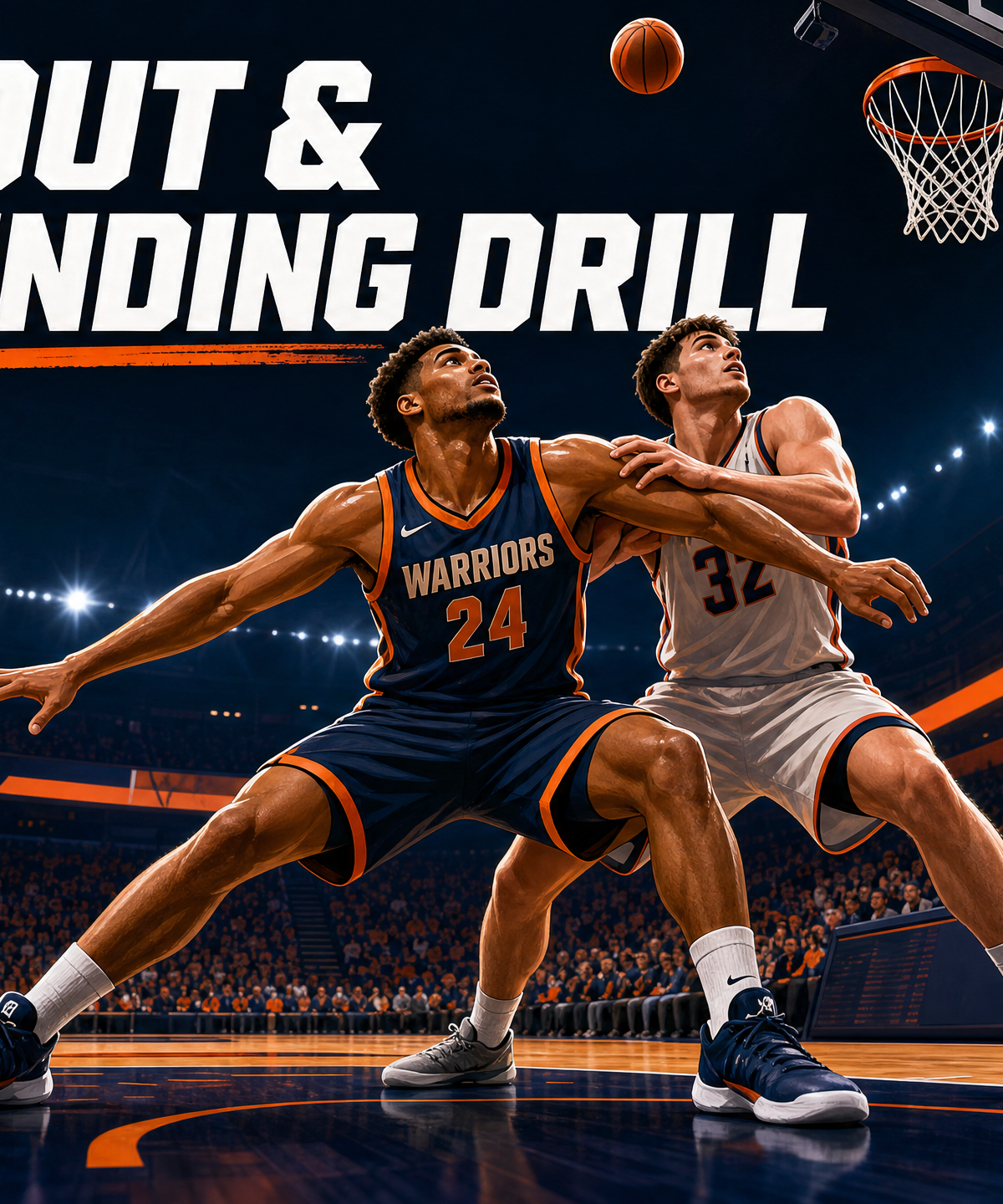
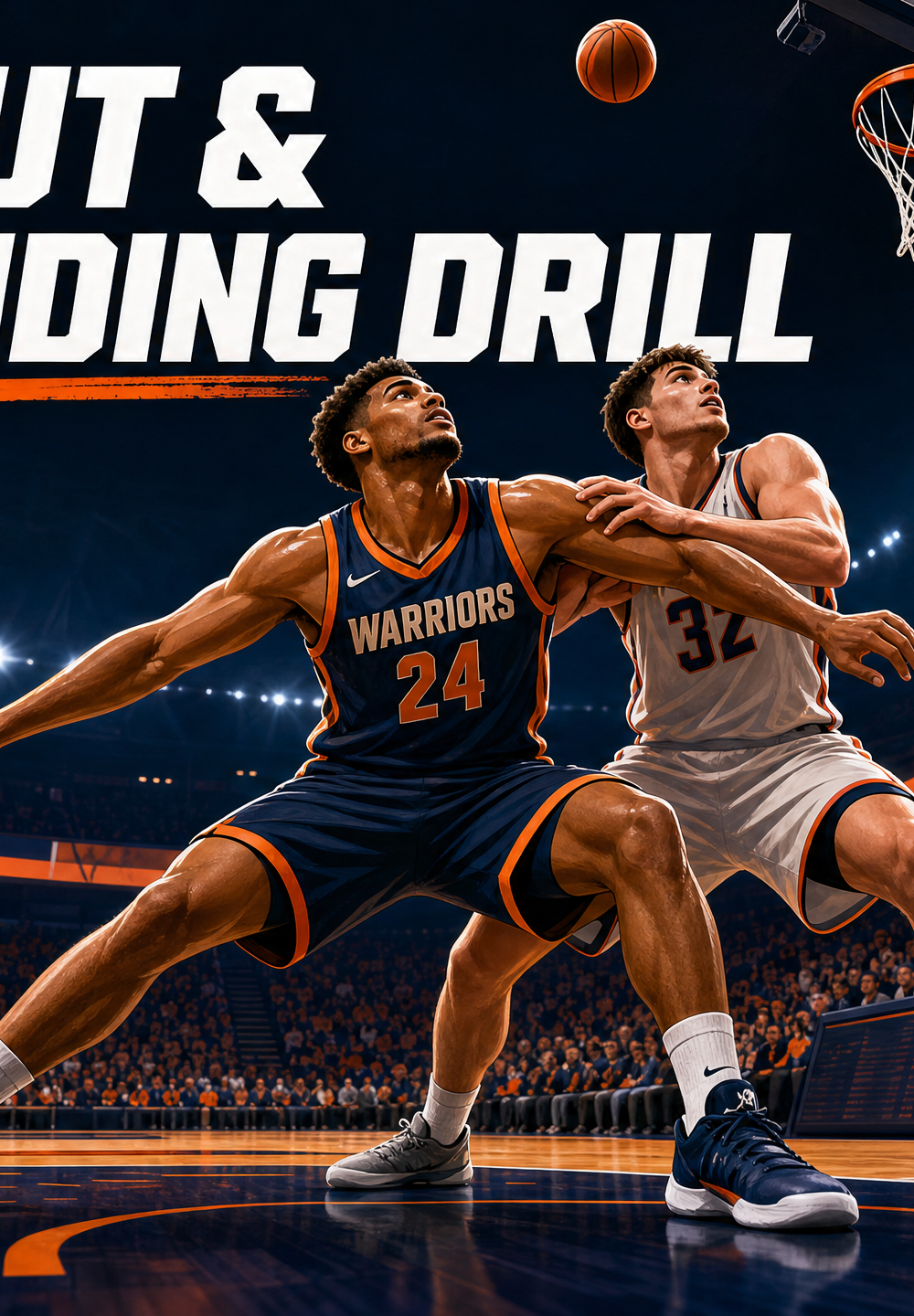
A foundational defensive drill teaching players to locate their assignment, establish physical contact, seal their opponent, and aggressively secure the basketball.
Equipment Needed
1. Overview
Rebounding is often the difference between winning and losing close games. The Box-Out and Rebounding Drill is a fundamental defensive exercise designed to teach players how to locate their assignment, establish physical contact, seal their opponent, and aggressively secure the basketball.
This drill emphasizes the transition from playing defense to securing possession, instilling the mindset that a defensive possession is not over until the rebound is secured. Use this drill early in the season to establish physical habits, or mid-season when the team is struggling with second-chance points.
2. Setup
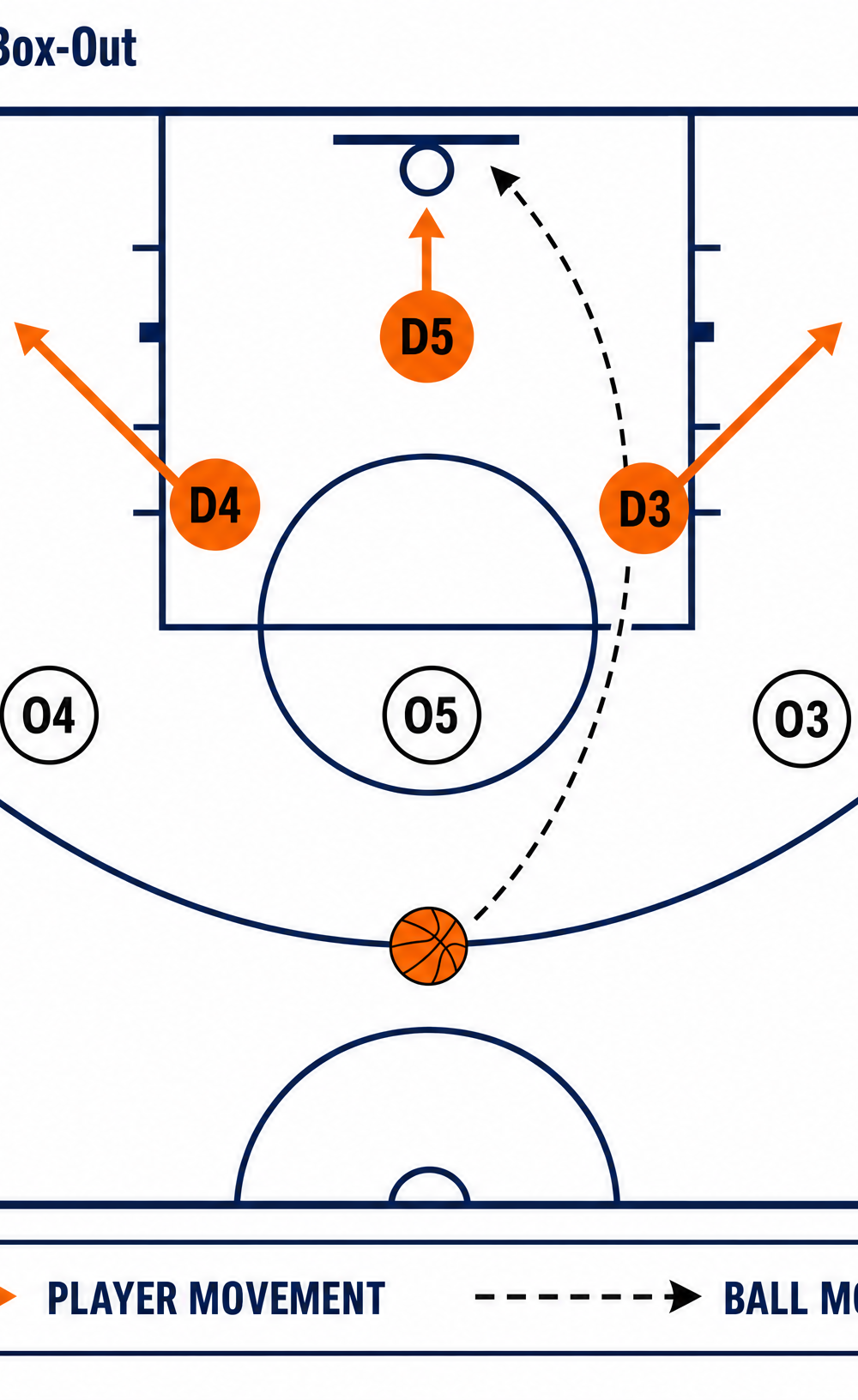
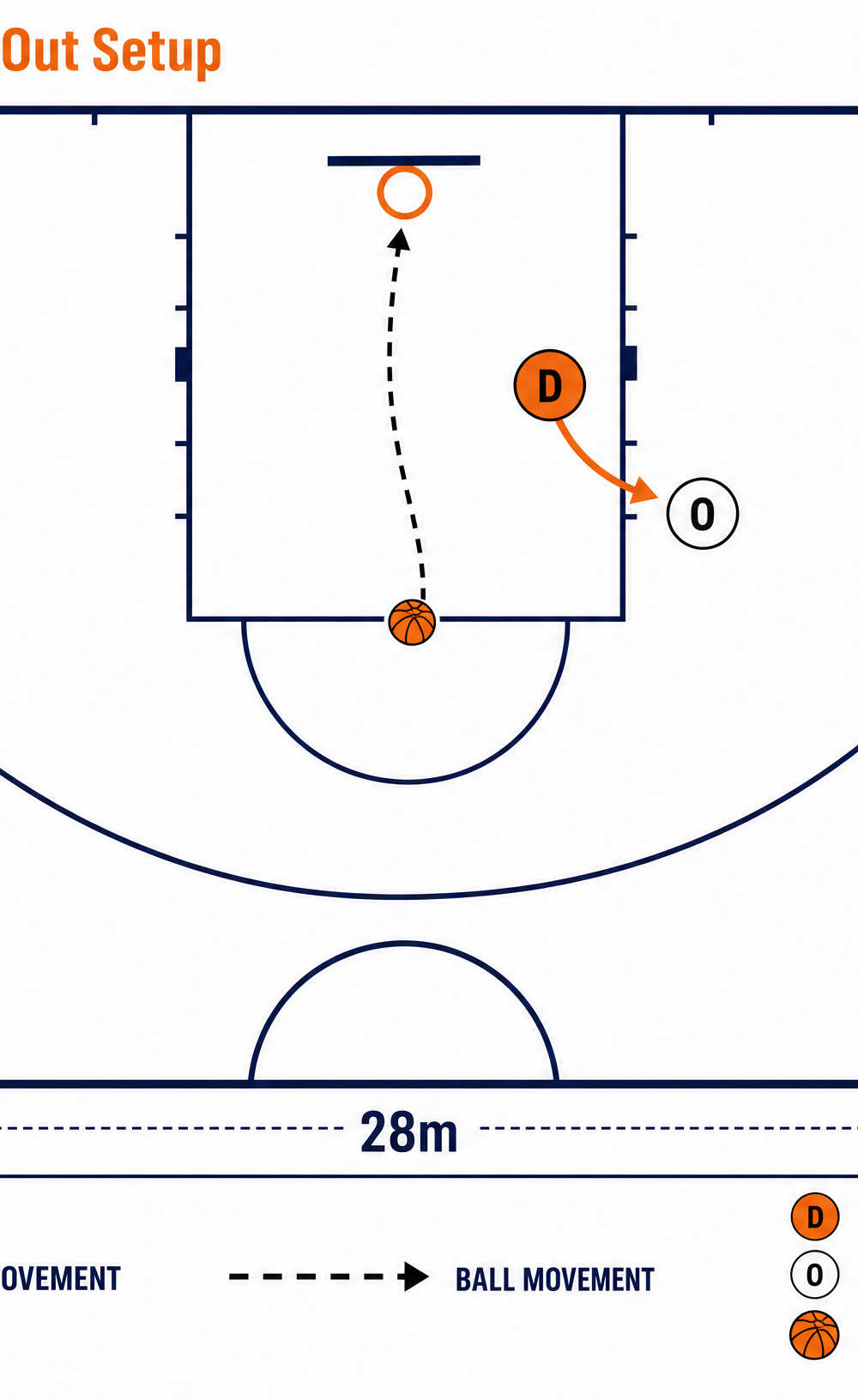
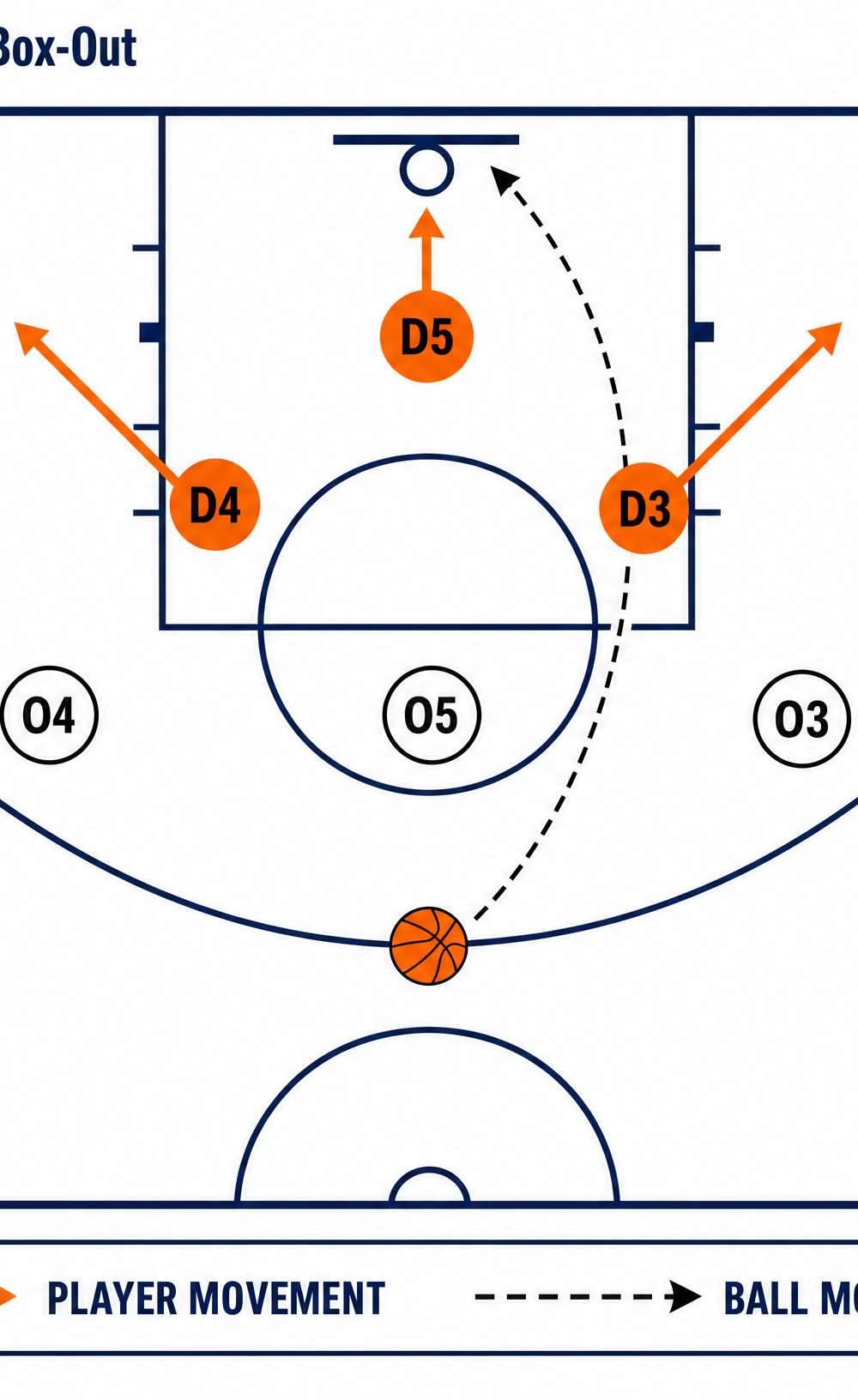
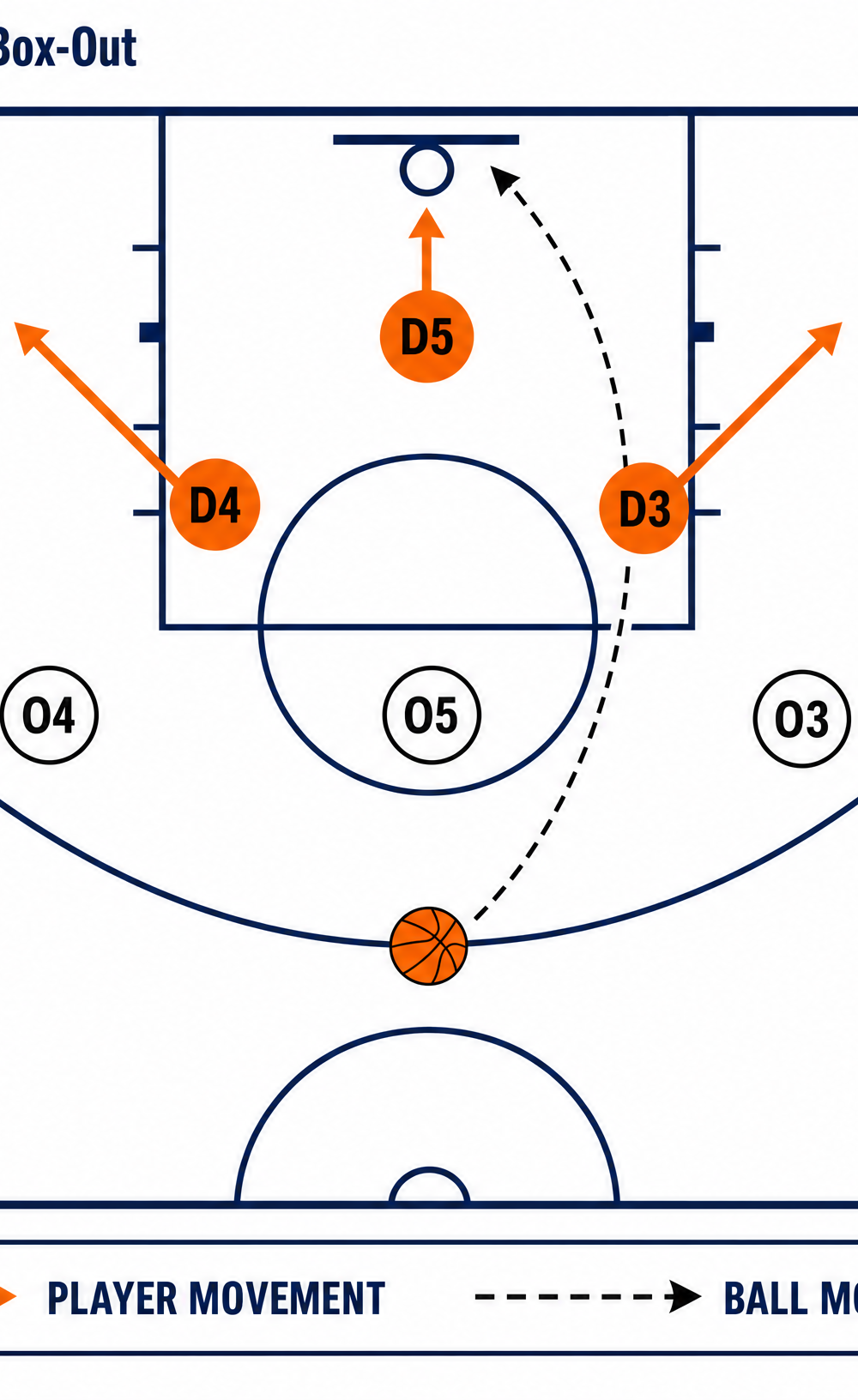
This drill requires a minimum of 6 players (3 defenders and 3 offensive players) plus a coach or point guard acting as the shooter. The drill is run on a FIBA half-court (28m x 15m). Place the three defenders — D3 (Small Forward), D4 (Power Forward), and D5 (Centre) — inside the paint in their natural post positions. Mirror each defender with an offensive counterpart: O3, O4, and O5 positioned just outside the key. The coach or point guard stands at the top of the key, approximately 6.75m from the basket, with the ball.
Equipment needed: 1 basketball, standard FIBA half-court with lane markings.
3. Step-by-Step Instructions
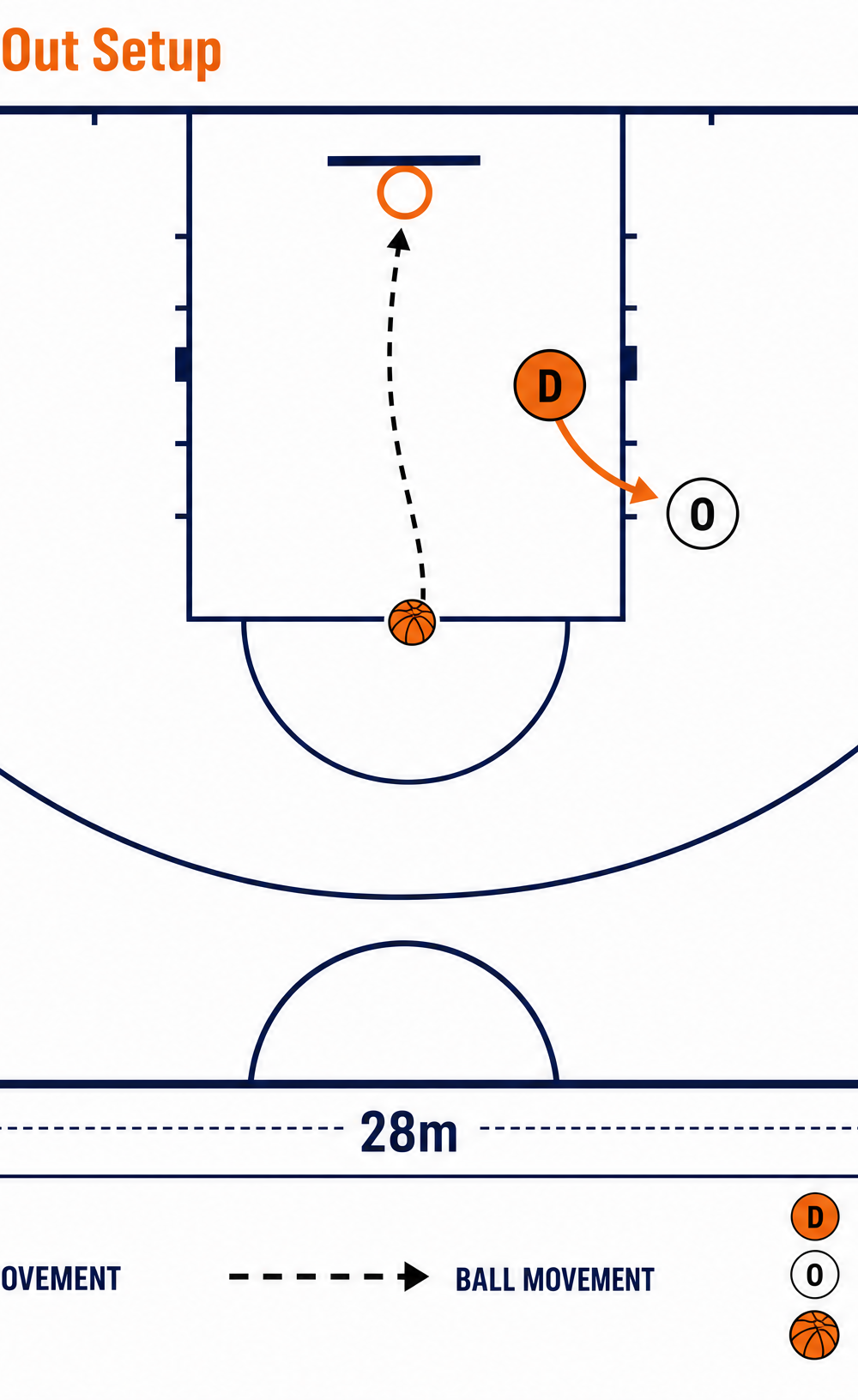
Step 1 — Initial Stance: All three defenders adopt an active defensive stance inside the paint, maintaining split vision on both their assigned offensive player and the ball handler at the top of the key.
Step 2 — The Shot Trigger: The coach or point guard shoots the ball. The moment the ball leaves the shooter's hand, the drill is live. This is the trigger for all defenders to react.
Step 3 — Locate and Contact: As the ball travels upward, each defender must immediately locate their assigned offensive player, take one decisive step toward them, and initiate firm physical contact using their forearm and hip.
Step 4 — The Box-Out Pivot: Defenders execute a reverse pivot (or forward pivot depending on their position relative to the offensive player), driving their backside into the offensive player's thighs. The base must be wide — feet shoulder-width apart — with hips low and arms spread at 90 degrees to maximise occupied space.
Step 5 — Hold the Seal: Defenders hold the box-out seal for a minimum of 1–2 seconds, tracking the offensive player's pressure through body contact rather than watching the ball. This is the most important discipline in the drill.
Step 6 — Release and Explode: Once the ball contacts the rim or backboard, defenders release the seal, take one explosive step toward the ball, and jump to secure the rebound at the highest point possible with two hands.
Step 7 — Chin the Ball: Upon landing, the rebounder immediately brings the ball tight under their chin with elbows flared outward — the "chin it" position — protecting the ball from being stripped by any crashing offensive player.

4. Key Coaching Points
"Hit First" is the single most important concept in this drill. Defenders must not wait passively for the offensive player to crash the boards — they must initiate the contact. A defender who waits is already losing the battle.
Low Centre of Gravity wins the leverage battle. Coaches should consistently cue players to drop their hips on the pivot. A player who boxes out standing tall can be pushed under the basket by a lower opponent.
Arms Wide at 90 Degrees maximises the physical space the defender occupies. Straight arms are weak and can be grabbed; bent arms at 90 degrees are strong and create a wide barrier.
Find the Body, Then the Ball corrects the most common instinct error. Players naturally want to watch the flight of the shot, but the box-out must be established before the defender earns the right to locate the ball.
Two-Handed Rebounds must be non-negotiable at all levels. Coaches should penalise one-handed tip attempts in this drill, as they create turnovers in game situations.
5. Common Mistakes
The following table summarises the most frequent errors coaches should watch for and the corresponding correction cue.
| Mistake | What It Looks Like | Correction Cue |
|---|---|---|
| Spectating | Player watches the shot arc instead of stepping to their man | "Eyes on your man, not the ball" |
| Soft Contact | Defender barely touches the offensive player, who easily slips around | "Hit them — make them feel you" |
| Standing Upright | Defender boxes out with straight legs, losing leverage | "Hips low, sit into it" |
| Dropping the Ball | Rebounder brings the ball to waist level after securing it | "Chin it — elbows out" |
| Ball-Watching on Release | Defender releases the seal too early to chase the ball | "Hold the seal for two full seconds" |
6. Variations & Progressions
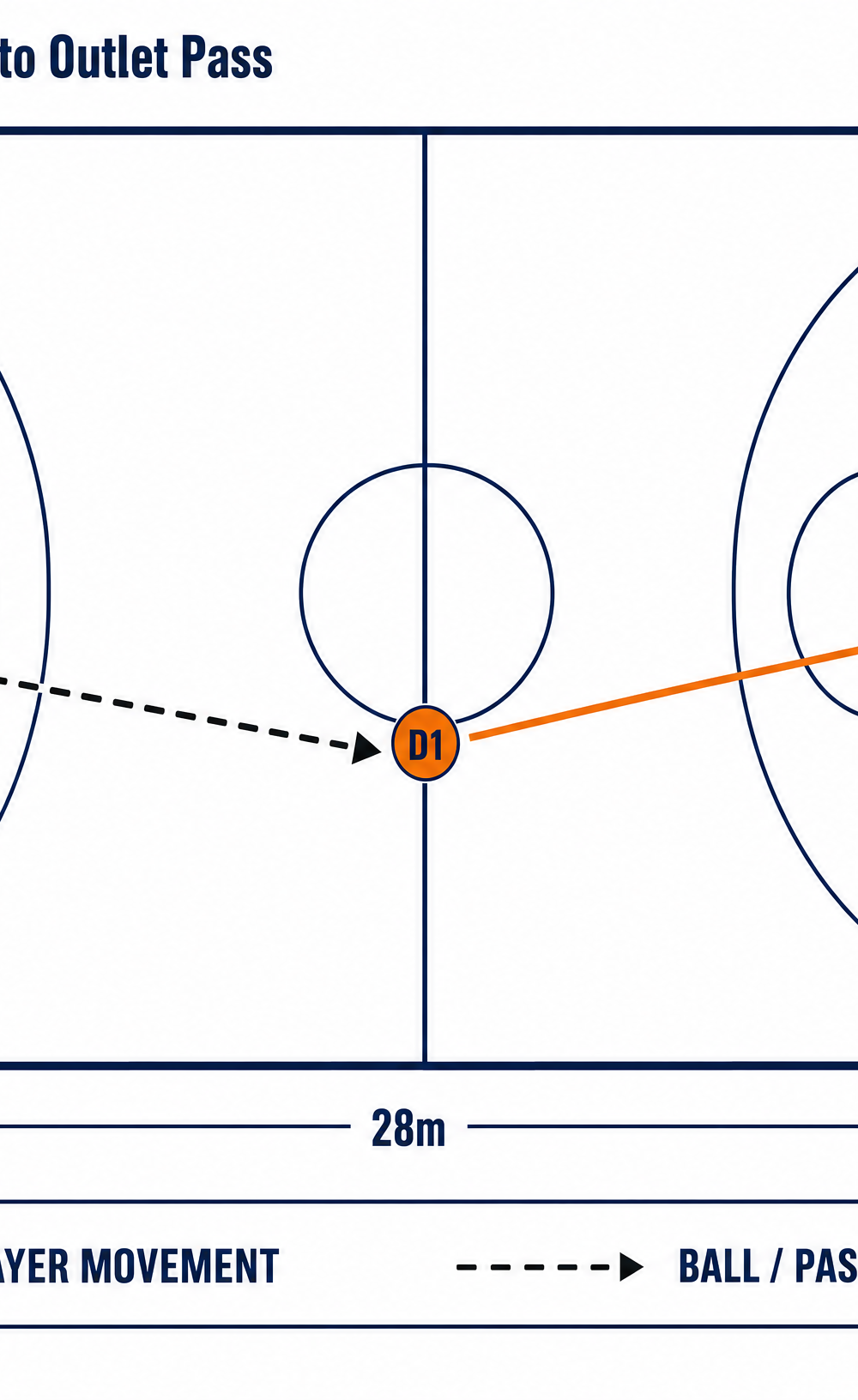
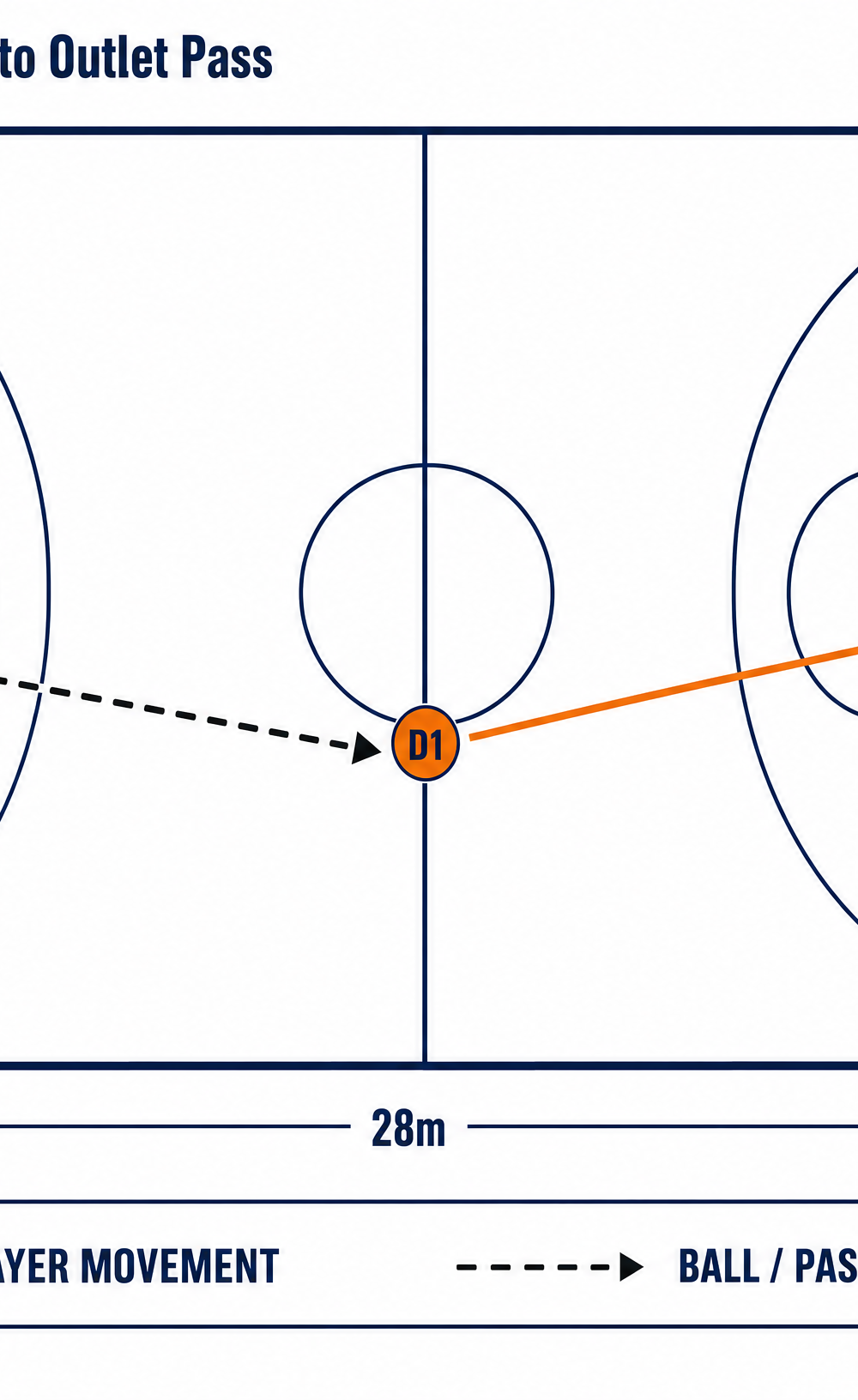
Progression 1 — Outlet Pass Transition: Once the defensive rebound is secured and the ball is chinned, the rebounder pivots to the outside (away from the paint traffic) and delivers a crisp two-handed overhead outlet pass to a guard (D1 or D2) who has sprinted to the wing or half-court. This replicates the full defensive possession sequence and builds transition habits simultaneously. See Diagram 3 for the full-court movement pattern.
Progression 2 — Live Play on Offensive Rebound: If the offense secures the rebound, the drill immediately transitions to live 3v3 play until a basket is scored or the defense forces a stop. This raises the stakes of the box-out contest and simulates real game pressure.
Variation 1 — Disadvantage Rebounding (3v2): Run the drill with 3 offensive rebounders against only 2 defenders. This forces defenders to communicate, prioritise the most dangerous crashing player, and cover more ground, building both skill and decision-making under pressure.
7. Age Adaptations
Under 10s: Simplify to a 1v1 format with a coach shooting. Focus solely on the concept of stepping to a player and making contact. Avoid introducing the pivot technique until the contact habit is established. Use a size 5 ball to make catching and chinning easier.
Under 12s–Under 14s: Introduce the 3v3 format and begin teaching the reverse pivot technique. Emphasise the "chin it" position to protect the ball. Add the outlet pass progression once the box-out mechanics are consistent.
Under 16s and Open Age: Run the drill at full game speed with maximum physicality. Implement the live play progression and the disadvantage variation. Demand perfect execution of the outlet pass and hold players accountable for every missed box-out with a conditioning consequence.