The 'V-Cut Release': Baseline Throw-In Set Play
A reliable, high-percentage baseline throw-in play that uses a sharp V-cut and a wide decoy to open up the middle of the court for an easy release.

Equipment Needed
1. Overview
The 'V-Cut Release' is a highly effective baseline throw-in play designed to create space in the goal third and safely transition the ball out of the defensive baseline area. By utilising a wide decoy run from the Wing Attack (WA) and a sharp V-cut from the Goal Attack (GA), this play forces defenders to commit to the sidelines, opening up the centre corridor for a clean release.
This play is particularly useful when the opposition is employing a tight, one-on-one marking structure or attempting to box you into the baseline corners. It relies on timing, sharp changes of direction, and strong, flat passing.
2. Setup
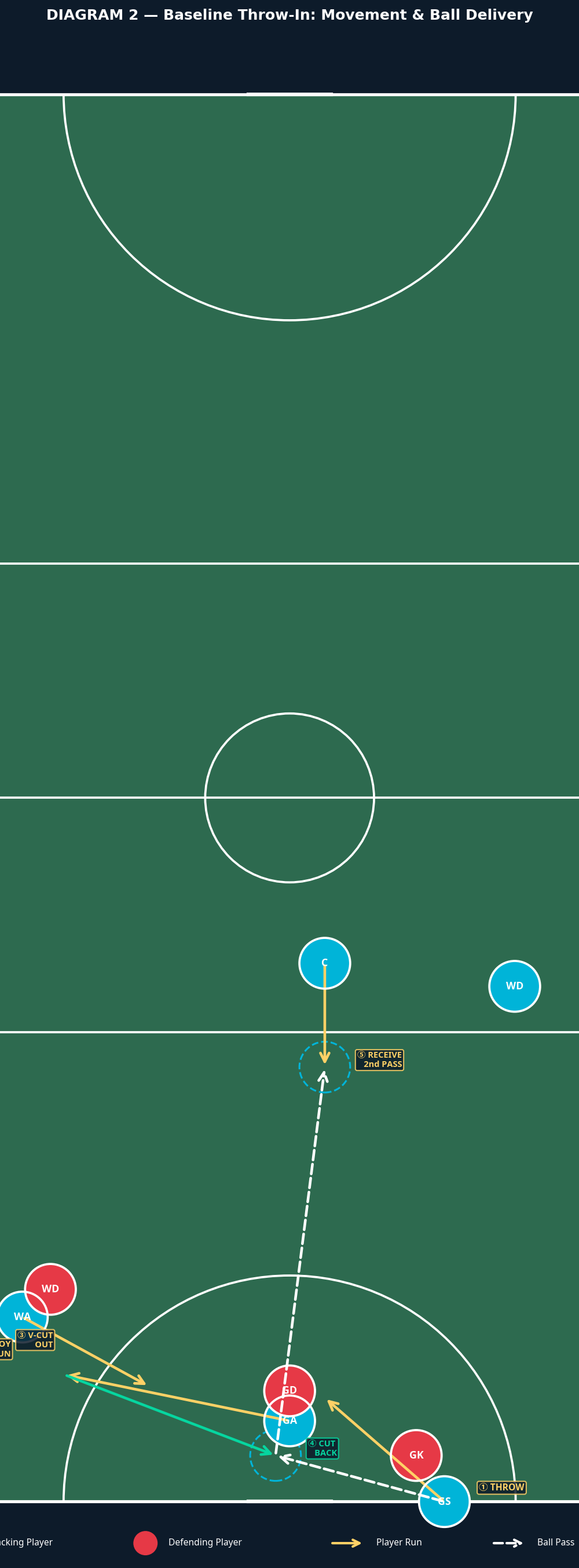
Court Area: Defensive Baseline (taking the throw-in)
Players Involved: GS (Thrower), GA, WA, C, WD
Initial Positions:
- GS (Thrower): Positioned on the baseline, right of the goal post.
- GA: Starts near the goal post, just inside the goal circle.
- WA: Positioned wide left, just inside the goal third.
- C: Starts in the centre third, just past the transverse line, ready to drive.
- WD: Positioned in the mid-court on the right side for balance.
3. Step-by-Step Instructions
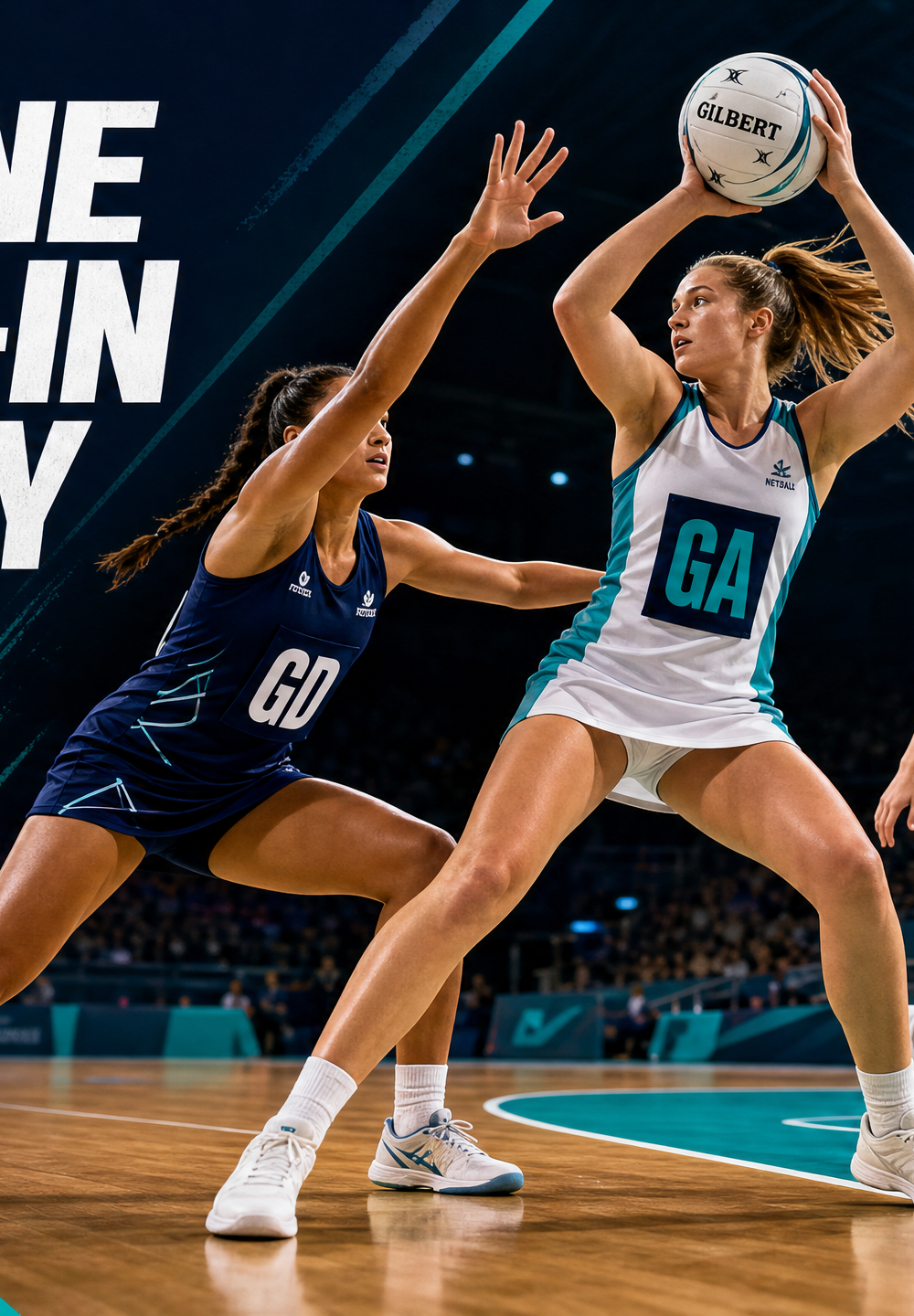
- The Setup: The GS takes the ball to the baseline and waits for the umpire's whistle. All players hold their starting positions to keep the court balanced and the defenders guessing.
- The Decoy (WA): On the whistle, the WA drives hard from their wide-left position directly toward the goal post area. This run is designed to drag the opposing WD into the middle and clear the wide channel.
- The V-Cut (GA): Simultaneously, the GA executes a sharp V-cut. They first drive out toward the left sideline (into the space vacated by the WA) to draw their defender (GD) out. They then plant their outside foot and cut sharply back toward the thrower (GS).
- The First Pass: The GS delivers a strong, flat chest pass to the GA as they cut back toward the baseline.
- The Release (C): As the GA receives the ball, the C times their drive perfectly, sprinting into the top of the goal third to receive the second pass from the GA.
- The Reset: The GS immediately steps onto the court to support, and the team transitions into their standard attacking structure.
4. Key Coaching Points
- Timing is Everything: The GA must not start their V-cut too early. They need to wait for the WA to clear the space before driving out.
- Sell the Decoy: The WA must sprint at 100% intensity on their decoy run. If they jog, the defender won't follow, and the space won't open up.
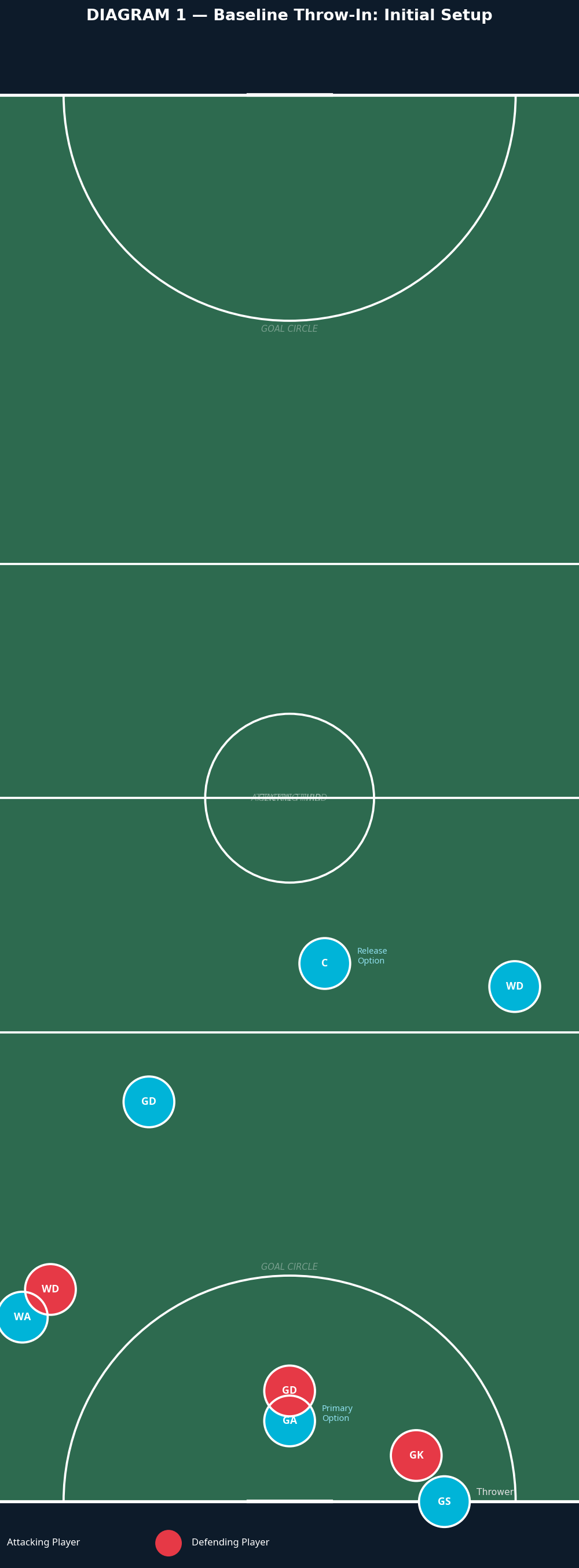
- Sharp Changes of Direction: The GA's V-cut must be sharp. They need to plant their outside foot hard and explode back toward the ball to lose their defender.
- Strong Passing: The throw-in from the GS must be a strong, flat chest pass. Loopy passes give the defenders time to recover and intercept.
- Clear the Channel: Ensure players not directly involved in the play (like the WD) stay wide to keep their defenders out of the central passing lanes.
5. Common Mistakes
- Drifting: The GA drifting back toward the ball rather than making a sharp, explosive cut, allowing the defender to stay on their hip.
- Poor Timing: The C driving into the goal third too early, bringing their defender into the space before the GA has even received the first pass.
- Weak Passes: The GS throwing a slow, looping pass that gets intercepted by a recovering defender.
- Lack of Eye Contact: Players not making eye contact before the pass is thrown, leading to miscommunications and turnovers.
6. Variations & Progressions
- The Long Bomb: If the opposing GD anticipates the GA's cut-back and jumps the route, the GA can continue their drive out to the sideline, and the GS can throw a longer pass over the top.
- The WA Option: If the opposing WD doesn't follow the WA's decoy run, the WA can stop their drive at the top of the goal circle and become the primary receiving option.
- Add a Screen: The WA can set a subtle screen on the opposing GD to help free up the GA on their cut-back.
7. Age Adaptations
- Under 10s: Simplify the play. Focus just on the GA making a straight drive out and a straight cut back. Don't worry about the WA's decoy run yet.
- Under 12s: Introduce the WA's decoy run, but focus heavily on the timing. Have the players practice the movements without the ball first.
- Under 14s+: Expect sharp, explosive cuts and strong, flat passes. Introduce the variations so players learn to read the defense and make decisions on the fly.